

Discover the 2025-2026 winter weather predictions in the US with the NOAA forecasts, the Farmers Almanac forecasts, the La Nina effects, and the trend of temperatures.
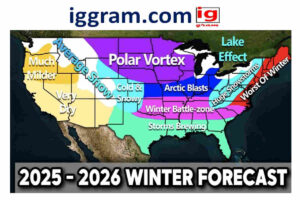

Winter Weather Outlook 2025-2026: Winter Weather Predictions Across the United States.
With the winter season a year away, at 2025-2026, weather specialists are making their predictions, and they are giving us a clue of what to expect in different parts of the United States. The projected weather patterns include a wide range of information, starting with the National Oceanic and Atmospheric Administration (NOAA) up to the Farmers’ Almanac.
NOAA Winter forecast: influence of La Ni in 2025.
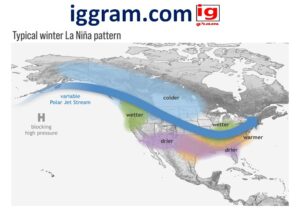
The Climate Prediction Center of NOAA has already published its winter prognosis, which suggests that the conditions of La Nina are evident and are likely to be experienced through the end of December 2025 until the end of February 2026. This is the stage of the El Nino-Southern Oscillation (ENSO) that usually impacts the weather patterns in North America.
- Weather Forecasts: Pacific Northwest and the northern Rockies will have low than normal temperatures. On the other hand, overly hot temperatures (above average) could be experienced in much of the south and east of the U.S., such as in California, the Mid-Atlantic and New England.
- Precipitation Patterns: La Nina has been known to cause drier seasons in the southern U.S and Southern California part of it whereas the Pacific Northwest may face above average rainfall.
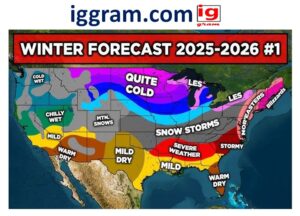

Almanac Forecast of Farmers: Chill, Snow, Repeat.
The Farmers Almanac which has been associated with long-term weather forecasting has labeled the winter season coming as Chill, Snow, Repeat. Their forecast suggests:
- Northeast and Mid-Atlantic: Here there are frequent snowstorms, and a large amount of snowfall is produced with rain along the Atlantic Coast, especially in mountainous regions.
- Beforehand in Upper Midwest and Great Lakes: Old fashioned cold and snowy.
- Southeast and Southwest: These areas would have near average temperature and wet conditions than average.
Temperature and precipitation patterns in the region.
On the foregoing, a regional breakdown of the U.S. looks like this:
- In high places (continentally and regionally): a preponderance of above-normal temperatures and below/near normal precipitation in most locations.
- Northern U.S (Northern Plains, Upper Midwest, Great Lakes, Northeast): Higher probability of lower than typical conditions and even greater than average snow cover/precipitation, particularly where storms coincide with cold air.
- Southern U.S. (Deep South, Southeast): They will be probably warmer than usual and it is likely that it will be wet as well (some rain will fall not as much snow).
- Pacific Northwest/northern Rockies: Expectations indicate the presence of above-normal precipitation (snow or rain based on the elevation) and a bit mixed temperature indications.
Snowfall / winter storms
- Other predictions point to the potential of an old-fashioned snowier winter in the north because of the weak polar vortex + La Nina leaning arrangement.
- Meanwhile, some (e.g. the The Old Farmers Almanac) indicate more moderate overall amounts of the snowfall, and more or somewhat more than average for others.
- There is a lot of uncertainty about how and when the major storms will occur, for example long term predictions can precondition the occurrence, but not the time of specific occurrence.
This is important to you (Ashburn, VA / Mid-Atlantic & general).
As you are located in Ashburn, Virginia (Mid-Atlantic), these trends can have the following implications on your region:
- Colder spells could be experienced in the Mid-Atlantic in case the polar vortex or jet stream bends Arctic air southwards.
- The trends of precipitation indicate a potential of excessive precipitation, which may be transformed into more snow/ice when the air is cold – or rain/mix when milder.
- Snowfall does not necessarily occur in large quantities and far exceeding average, however, there is a higher likelihood of severe winter storms compared to a soft and silent winter.
- Since the western U.S. might lean towards milder/drier, the east may be more preferred in case conditions are favorable.

Critical caveats & observations.
- Lack of accuracy: Seasonal forecasts provide general trends (months ahead), but do not provide the number of snow-days you will have or what the average temperature will be. They concern more probabilities than certainties.
- Minor details are significant: The intensity of the jet stream, the time when storms occur, the specific route of the cold air invaded, etc. These facts will define the real performance.
- Background climate: Background climate will mean the many days milder than winters of previous decades even with a stress on a scenario of a colder winter than usual.
- Check on updates: The closer we are (late fall and early winter) the more we will know, and the actual conditions will be available.
Expert Insights
According to meteorologists, La Niña conditions are one of the major factors that can affect the winter prediction, but other atmospheric patterns and anomalies may have an impact as well. There is a need to keep track of updates given by NOAA and other weather organizations as the season advances.

Frequently Asked Question (FAQs).
Q 1: What is La Nina, and what is its impact on winter weather?
A1: The cool phase of El Niño-Southern Oscillation is called La Nina, which entails the sea surface temperatures that are below average temperature in the eastern and central Pacific Ocean. This effect has the ability to affect weather patterns worldwide, with a tendency of causing drier weather towards the south of the U.S., and wet weather toward the Pacific North West.
Q2: To what extent are long-range weather predictions such as the ones in the Farmers-Almanac accurate?
A2: Forecasts are long term forecasts which depend on historical tendencies and observation. Although they give broad trends, their accuracy may not be high and it may be advisable to use various sources of information to have an overall perspective.
Q3: Is the winter before the 2025- 2026 to be colder than normal?
A3: The prediction shows that some areas are likely to have below average temperatures especially the Pacific Northwest and the northern Rockies part. Nevertheless, above-average temperatures could be experienced in much of the south and east of the U.S.
Q4: What will it take to get ready in time before the next winter?
A4: Winterizing your house, maintaining heating systems, and stocking supplies of crucials such as salt and snow removals as well as keeping up with local weather forecasts are advisable.
Conclusion
La Nina conditions are also likely to affect the winter season of 2025-2026 and will have different effects on the United States. Some may be colder and snowier whereas others would be milder. The ability to stay informed by credible sources will assist individuals and communities to be ready to the next season.
Also read- Exposed Frost Advisory until 9 a.m for Greater Cincinnati