

There are 6 Authentic reason why dogs chase their tails ?, and the activity may be considered as usual playful activity or the symptom of stress or health problems.
-Key to know-
|
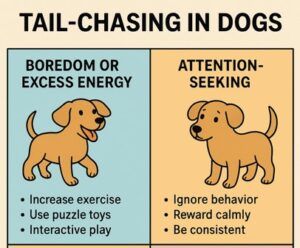

Here’s a breakdown:
- Amusement and Diversion.
- Puppies and especially their tails may be chased around by the puppies just to have fun.
- They might not notice that it belongs to their body and hence it is an amusing game.
- Exploration and Curiosity
- Young dogs will tend to touch their bodies and the environment.
- Chasing the tail may be a means of learning of self.
- Boredom or Excess Energy
- Unless dogs are given enough physical or psychological stimulation, they can run after their tails to relieve excess energy.
- This is particularly prevalent among breeds of high energy.
- Attention-Seeking
- Other dogs acquire that running after their tails attracts the attention of their owner and repeat it again.
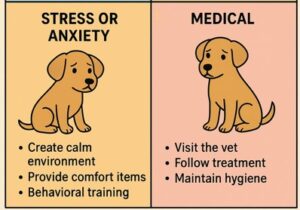
- Stress, Anxiety or Obsessive Behavior.
- Tail-chasing may be compulsive particularly when a dog is anxious or stressed.
- Compulsive tail-chasing may have to be addressed through behavioral therapy by a veterinarian or a trainer.
- Medical Reasons
- A dog can chase or bite the tail or the rear due to fleas, ticks, allergies or irritation about it.
- A behavior could also be brought on by anal gland problems or damage.
Hint: When tail-chasing is common, severe, or injurious, it is worthwhile to visit a veterinarian in order to eliminate medical causes or other problems that may relate to anxiety.

distinction between playful tail-chasing and a problematic (medical or behavioral) tail-chasing among dogs:
- Playful Tail-Chasing
- Frequency: Occasional; the majority of the time when the dog plays or when he is excited.
- Intensity: Will be interrupted by distraction or calling them.
- Mood: Dog appears to be happy, waging its tail, relaxed body language.
- Attention: tends to follow the ball in bursts which are usually interwoven with other actions (running, fetching, jumping).
- Age Factor: This is common in puppies, young dogs, as they experiment with their bodies.
- Fear or Compulsive Tail-Chasing.
- Frequency: Occurs long and recurrently, occasionally on a daily basis.
- Intensity: Dog is difficult to distract or distract, and can be frustrated when interrupted.
- Mood: The body is tense, the tail is stiff, and sometimes it may whine or bark.
- Attention: Extremely concerned with tail; can bite or mutilate it.
- Other Signs: Pacing, repetitive behavior, destructive behavior.
- When to Do It: It is suggested to start behavioral training or consult a vet or animal behaviorist.
- Medical-Related Tail-Chasing
- Frequency: It may be common or occasional, and is often brought about by pain.
- Intensity: Dog can bite, lick or chew tail.
- Mood: Experiences irritation, scratching, whining, restless.
- Attention: Typically near the tail base, anus or rear.
- Other Signs: Sores, odor, swelling, redness or hair loss.
- Possible Causes:
a) Fleas, ticks or parasites.
b) Anal gland problems
c) Allergy or infection of the skin.
d) Injuries or sores
- When to Act: See a vet to find out and treat the underlying cause.
Quick Rule of Thumb:
- Fun & occasional → normal.
- Painful, prolonged or injurious, etc→ medical or behavioral assessment required.
The following is a practical guide to the reduction of tail-chasing in dogs, which depends on the cause:
- In case It Is because of boredom or too much energy.
- Exercise: Walk, run more or play. Dogs that have high energy requirements usually require more than one walk a day.
- Mental Stimulation: Play puzzle toys, treat dispensing toys or use training exercises to keep their brain occupied.
- Interactive Play: Agility games can replace tail-chasing, or fetch, or Tug-of-war.
- If It’s Attention-Seeking
- No Tail-Chasing: Do not pay attention when your dog runs after his or her tail. Any response strengthens the behavior.
- Small, Individual: Selectively reward your dog with praise and with a good activity when he/she performs the right play or acts calmly.
- Consistency: All the members of the household should be subjected to the same rules to prevent mix up.
- In case It is Stress or Anxiety-Related.
- Quiet Space: Minimise noises or stressors.
- Routine: Dogs are healthier with regular feeding, walking, and playtime.
- Comfort Items: It can be helped by anxiety vests, comfy bedding, or safe places.
- Behavioral Training: It is good to desensitize and use positive reinforcements gradually.
- Professional assistance: In case tail-chasing is an obsessive behavior, a veterinary behaviorist may provide specific interventions.


- If It’s Medical
- Vet Check: Rule out first fleas and ticks, anal gland problems or injuries.
- Treatment: Do as the vet recommends- medication, topical creams or minor procedure may be required.
- Hygiene: To minimize irritation keep the tail area clean and groomed.
- General Tips
- Dismissal: Interrupt tail-chasing behavior with toys, instructions or rewards.
- Scheduled Play: Structured play every day is helpful in decreasing boredom-motivated behavior.
- Observation: In Diary Note the time of day and when tail-chasing occurs, what causes it and how long it lasts to identify patterns.


Important Idea: The harm to the dog is not serious when tail-chasing is only done occasionally, in play, and without causing harm. The issue comes about when it becomes long lasting, compulsive and medically induced.
Conclusion
The phenomenon of tail-chasing in dogs is a complex phenomenon that may have as many causes as there are dogs in the world- simple fun or serious medical or psychological problems. The context, frequency and intensity of this behavior should be comprehended to be able to differentiate between fun and something to be done.
Tail-chasing is a normal developmental process and a normal aspect of curiosity in most instances particularly in puppies and young dogs. It is usually an expression of the exuberant nature or the means to relieve the surplus energy. Nevertheless, once the behavior is common, severe, or damaging, it can be an indicator of more underlying problems of stress, anxiety, compulsive disorders, or health issues such as fleas, anal gland infections, or allergic reactions.
It is important to observe: the playful tail-chasing is not very long, it is not very difficult to break off, it is not accompanied by tense attitude. Compulsive or medically related tail-chasing is in contrast characterized by fixation, inability to redirect and occasionally physical evidence such as irritation or injury.
Finally, notwithstanding the fact that tail-chasing is not always dangerous and can be even fun, they should not overlook persistent or intimidatory types of the behavior. The owners of pets are supposed to be aware of the surrounding events, be mindful and act accordingly so that the dog stays healthy and happy.
Also read- 3-reasons pets and dog howl and their Hack