
The truth about french government colapse in 2025 : French government crashes as PM Francois Bayrou defeats the vote of confidence. The newly elected president Macron is under pressure to replace premier due to the increasing debt, the demonstrations such as Bloquons tout, and political unrest.

What Happened?
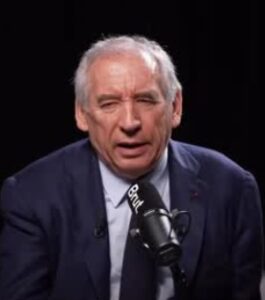
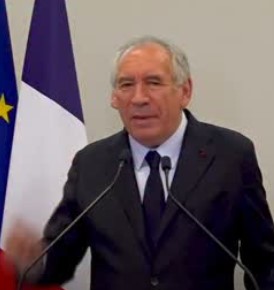
- On September 8, 2025, the French government collapsed as Prime Minister François Bayrou was defeated by a very hefty majority, 364 to 194 in the National Assembly in a motion of confidence, which caused him to resign.
- Bayrou minority government had been less than nine months old and was the fourth prime minister in only 12 months- a case of extreme political instability.
Why Did It Collapse?
- Bayrou summoned the confidence vote to garner support on austerity package worth euromoney44 billion, including a reduction of the public expenditure and abolishment of two national holidays- decisions that attracted immense backlash.
- His proposals were dismissed by a wide range of the political spectrum -far-right and even left-wing parties- and indicated the discontent with the social effects of the plan.
Effects of the Collapse.
- And the collapse spirals France into political insecurity, where demonstrations and possible strikes are imminent, to derail the 2026 budget plan.
- President Emmanuel Macron is starting to experience increased pressure to fill his fourth prime minister within a year and stabilize a government able to pass the 2026 budget.
- Game: The public debt of France is 114 per cent of GDP, and the costs of borrowing are rising at a very high rate–ringing warning bells among credit agencies where fiscal stability is under the spotlight.
- Analysts warn of a continued fiscal cough: the cost of servicing debt will rise to more than 100 billion a year by 2029, further limiting financial flexibility in France.

and, here’s a source-supported in-depth analysis of the four areas you requested: political aftermath, economic outlook, the Bloquons tout mobilisation and the top candidates to succeed François Bayrou. I will mark the most significant assertions with citations of news.
1) Political blowback – the immediate consequences and the consequences overall.
- Short-term constitutional measures. Following the no-confidence vote (Sept 8, 2025) Bayrou is required to submit the resignation of his government to President Macron; Macron can request ministers to remain in the meantime as he appoints a new prime minister. Without securing a functional majority, Macron may propose a new, transitory minority cabinet, seek a coalition or simply dissolve the National Assembly and call snaps, any of which is a major political gamble.
- Parliamentary paralysis. The vote revealed that the austerity package of Bayrou was unpopular on both sides of the political divide; it will be extremely difficult to pass a major fiscal reform or even the budget 2026 without either grand compromises or a new parliamentary arithmetic. Look at legislative paralysis and confidence tests.
- Some electoral and party implications. The fact that the centrist project surrounding Macron (and that some members are interested in a more right or left-wing alternative) are weakened raises the likelihood of a shift in politics: more assaults on the far right and the far left, greater union power and demands on the position occupied by Macron in Europe. According to the analysts, Macron will have less room to manoeuvre in forums within the EU, as the home politics will engulf him.
2) Economical forecasts- short term, medium term risk.
- High debt burden. The French state debt is approximately 3.3 trillion or 114 percent of GDP – and interest payments are expected to be among the biggest expenditures in the budget; some estimates show debt service will reach over 100 billion a year by 2029 without growth or policy alteration. That limits fiscal possibilities.
- Scenario A – austerity is back to the future (Bayrou-style). A new administration adopts equivalent-scale spending reductions like the one proposed in Europe (i.e., the 44bn), then predictions indicate that the estimated increase in debt would slow modestly (by some models, the end-of-period debt ratio would have fallen by a few percentage points), although such a step would risk bringing growth to a halt and triggering strikes – expensive politically.
- Scenario B – tax heavy alternative. When successors choose to raise taxes (wealth or corporate taxes) instead of drastic reduction of big spending, markets can fear growth and investors might insist on high yields; observers say that heavy fixation on taxes can slow down private investment but even then fail to calm markets.
- Market reaction, and rating risk. The increase in the cost of borrowing (Frances yields going up in comparison with core counterparts) and the political unpredictability heightens the risk that credit rating agencies will issue warning signs on negative reviews, pushing up the cost of financing further and resulting in a vicious cycle of fiscal attrition. Both the Economist and Reuters report that France is verging on the problem child category in terms of euro-zone debt talks.
3) Bloquons tout and protest risk -what to expect (operational effects)
- What is it? The unions, grassroots and certain activist networks have come together as Bloquons tout (translated as approximately means block it all) to call a nationwide action day, intended to block transport, ports and other important infrastructure and services to protest the austerity package and the intended abolishment of public holidays. Dates are being set by the organisers in early September (the intended action around Sept 10 in particular), and a more intense campaign has been made online and via the union.
- On-the-ground impact (likely). The intelligence and reporting indicate that localized, yet substantial disruption is probable: rail/metro delays, airport disruption of certain flights, blockages at logistic hubs and protests in major cities (Paris, Marseille, Lyon). Governments anticipate chaos but (to date) do not predict a one-off mass move – the threat is more of blockades and rolling strikes that can have a severe impact on commuters and supply networks.
- Escalation risk. The next actions by Macron may be interpreted as imposing austerity without a buy-in in parliament, unions and street movements may intensify their tactics (prolonged strikes, strikes in key sectors such as energy and transport) adding political pressure and complicating governance further.
4) Potential heirs and the decision Macron has.
Macron needs to strike a balance between political digestibility in the Assembly, believability with markets and electoral calculation. Name candidates circulating in reporting (short sketches and how they stack up):
- Gérald Darmanin (Justice Minister, formerly Interior) — a robust law-and-order political figure who has populist centre-right appeal. Others view him as a choice to unite the conservatives yet he is politically polarising and is not likely to gain support of leftists. (said to be a possibility; medium betting odds).
- Sébastien Lecornu (Defence Minister; fairly young, perceived as technocratic) – floated by some as a technocrat compromise candidate with experience as a minister; might go down well with centrists and some centre-right.
- Catherine Vautrin (Labour/centre-right figure) – occasionally referred to as a consensus administrative figure; may be imprescripted on court centre-right deputies.
- A centrist reappointee (very unlikely): such candidates as Élisabeth Borne or other old hands are mentioned, yet political baggage and recent upheavals mean that quick returns would be complicated.
- Wildcard choices: a Socialist or centre-left prime minister might be chosen to seek a cross-bench coalition – but that is likely to make Macron backbenchers angry, and it might not even form a majority in parliament. Reuters says that Macron might test different combinations but there is no clear single stabilising figure.
Conclusion on successors: according to reporting there is no obvious leader who has the parliamentary backing to enact tough fiscal policies. According to betting markets and commentators, a number of names have low single-digit probabilities and the situation is viewed as highly fluid.
Short scenario map (what to watch in the next 7-21 days)
- Macron: premier, centrist technocrat or conservative nominee or coalition-building. (Short-term market and political test.)
- Union/”Bloquons tout” activities — depth of disruption on the scheduled dates; presence or absence of unions striking on a rolling basis or on a sectoral basis. (Operation risk in transport/airlines/ports).
- Markets / ratings indicators – bond yields and rating agency comment (when yields soar, demand to induce a quick change in policy rises).
- Parliament arithmetic – any cross-party bargaining, or dissolution and snap election talk (dissolution a very risky political gamble).
Conclusion
France is experiencing one of the most turbulent political eras in the recent history. Avoidable austerity gambit of Prime Minister François Bayrou has seen the ensuing scramble by president Emmanuel Macron to locate another head of government at the same time parliamentary stalemate and social outrage is increasing.
The massive debt crisis of the country, the increase in the cost of borrowing money and the ever-present danger of organized protests such as Bloquons tout all reflect how wobbly France has gotten.
There is no clear heir who can inspire majority support, so the coming weeks will have to test the survival instinct of Macron and might influence the future of the economy and democratic processes in France over the next several years.
Also read- Shocking , Trump issued threats of war targeting American cities


2 thoughts on “The truth about french government colapse in 2025”