
Discover the outer banks, North Carolina -It is a 200 mile stretch of barrier islands with wild horses, lighthouses, perfect beaches, history of the lost colony, and the first flight of the Wright brothers. Discover Cape Hatteras, Ocracoke, Corolla and so on.
Overview
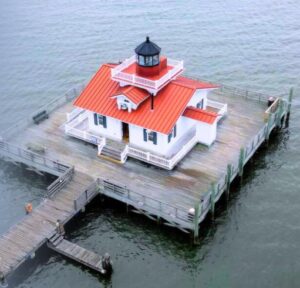
The Outer Banks (OBX) is a row of thin barrier islands near the coast of North Carolina (and a limited region of southeastern Virginia). They divide the Atlantic Ocean and the mainland and the Pamlico, Albemarle, and Currituck Sounds.
- Length: ~200 miles (320 km) of coastline
- Breadth: Is between a few dozens of yards and a few miles.
- Population: around 57000 permanent inhabitants (much larger in the time of tourists)
- Examples: Beaches, lighthouses, wild horses, fishing, watersport, history (first flight, Lost Colony, shipwrecks).
Geography
- Northern OBX: Corolla, Duck and Carova (home of wild Spanish mustangs roaming free).
- Central OBX: Kill Devil Hills, Kitty Hawk, Nags Head, and Roanoke Island.
- Southern OBX: Cape Hatteras national seashore, Ocracoke Island, and Cape lookout.
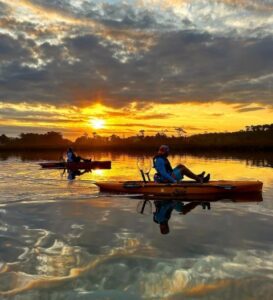
- Sights: Pamlico Sound is the biggest lagoon in the East Coast that is very nice in kayaking, kiteboarding, and fishing.
History & Heritage
- The Lost Colony (1587): The earliest English settlement in the New World was lost in the Washington Island of Roanoke.
- First Flight (1903): The first powered flight of an airplane took place at Kill Devil Hills near Kitty Hawk by Orville and Wilbur Wright who made the first flight into the history of the world.
- Maritime History: Exploring the history of the Atlantic Ocean, which was dubbed as the graveyard of the Atlantic because of the thousands of shipwrecks.
- Blackbeard the Pirate: Ocracoke Island: This is the island where he hid until his demise in 1718.
- Civil War: The islands were very important as Union strongholds and ports of blockading.
Attractions & Things to Do
Nature & Outdoors
- Cape Hatteras National Seashore: Campgrounds, wildlife, and beaches that are under protection.
- Cape Lookout National Seashore: Remote and can only be reached by boat, wild horses and shelling.
- Pea Island national wildlife refuge: Birdwatching refuge.
- Wild Horses of Corolla & Ocracoke: The descendants of Spanish mustangs.
Historic Sites
- Kill Devil Hills. Wright Brothers National Memorial.
- Roanoke Island Festival Park/ Fort Raleigh National Historic Site ( Lost Colony).
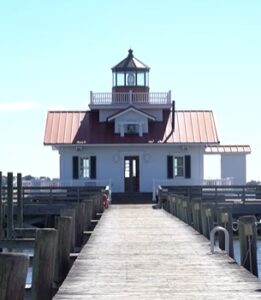
- Lighthouses:
o Cape Hatteras (highest brick lighthouse in the U.S.)
o Bodie Island
o Ocracoke
o Currituck beach lighthouse.
Adventure & Recreation
- Watersports: Watersports Surfing, kiteboarding, paddleboarding, kayaking.
- Fishing: Surf fishing, pier fishing, and offshore charters of the world.
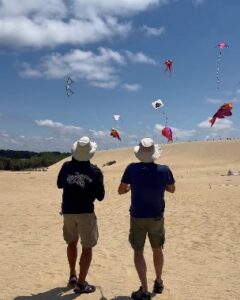
- Sandboarding, Hang Gliding: Jockey’s Ridge State Park (highest natural system of sand dunes on the East Coast).
- ScenicDrives: NC Highway 12 is a ferry-connected road running the whole length of OBX.
Food & Cuisine
- Famous for fresh seafood:
o Blue crabs, oysters, shrimp, tuna, mahi-mahi.
- Hatteras chowder (broth, potatoes, clams, no cream).
- Soft-shell crab sandwiches.
- Domestic attractions: Duck Donuts, Kill Devil Rum, Outer Banks Brewing Station.
Lodging
- Vacation rentals (the most popular are beach houses).
- Resorts and inns, Boutique hotels and campgrounds.
- Ocracoke and Hatteras are more relaxed; the Nags Head and Kill Devil Hills are busier.
Weather & Best Time to Visit
- Climate Humid subtropical: warm and humid summer, mild winters.
- Hurricane: June- November (monitor storms).
- Peak season: late spring (May10 June) or early fall (Sept10 Oct) – less people, nice weather.
Getting There & Around
- Either by road: U.S. Highway 158 and NC Highway 12 are the significant ones.
- Air: Norfolk International Airport (VA) or Raleigh-Durham (NC). In Manteo and Ocracoke, there are small airports.
- By ferry: NC Ferry System serves between Ocracoke, Hatteras, Cedar Island and Swan Quarter.
- By bicycle: The bike friendly in some towns such as Duck and Corolla.
Festivals & Events
- Outdoor drama: The Lost Colony Outdoor Drama (Roanoke Island, summer).
- OBX Seafood Festival (October, Nags Head).
- Wings Over Water Festival (Photography, Birdwatching).
- Pirate Festival at Ocracoke.
Fun Facts
- OBX possesses the highest sand dune in the East Coast (Jockey Ridge).
- Wild horses have been allowed to roam free in a period of more than 400 years.
- Cape Hatteras Lighthouse In 1999 it was relocated (2,900 feet inland) to avoid being eroded by the shoreline.
- Popular filming location: Nights in Rodanthe and the Netflix show the Outer Banks (but shot in South Carolina).
Conclusion
The Outer Banks of North Carolina is not merely a beach resort, it is where history, culture and unfiltered coastline come in one. All of the OBX has a story, whether it is the puzzle of the Lost Colony and the first flight of the brave Wright brothers or the wild Spanish mustangs and the legendary lighthouses.
Its 200 miles of wind swept coast, and seashores, which are secure make it heaven to adventure, family and even history lovers. Kayaking the Pamlico Sound, fishing in the offshore waters, climbing the Cape Hatteras Lighthouse, or enjoying the fresh sea food with the ocean view, the Outer Banks provides a relaxing and memorable experience.
It is an exception on the Atlantic coast, where you can go back in time, experience the untouched nature, and still have the comforts of the modern world.
Also read- Great Wolf Lodge since 1997

