
Explore Lake Tahoe the beautiful alpine lake in California-Nevada border. Its crystal waters, mountains, skiing, hiking, and outdoor all-season adventure await you in this classic natural adventure.
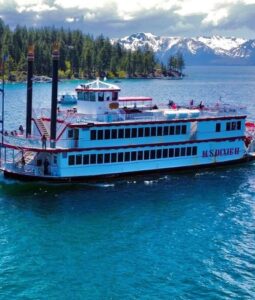
General Overview
- Location: Borders the California and the Nevada borders of the Sierra Nevada mountain range.
- Type: Freshwater lake.
- Elevation: 6,225 feet (1,897 meters) above the sea level.
- Surface Area: 191 square miles (495 km 2).
- Maximum depth: It is the second-deepest lake in the United States (after Crater Lake, Oregon) and the tenth-deepest in the world.
- Volume: Estimated at 39 trillion gallons (147 km 3 ) of water.
- Length of Shore: 116km (72 miles) or so.
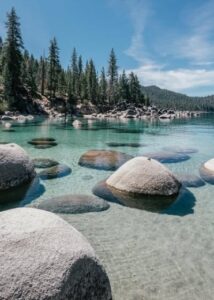
- Water Clarity: Water used to be very clear with a usually 70 feet visual capability but this has declined over the years following the changes in development and environment.
Geology and Formation
- Characteristics Type: Tectonic basin glacially-formed lake.
- Age: Age was estimated as more than 2 million years old.
- Formation: It was formed by the process of faulting and glacial processes. It is a depressive block of land between faults, which is later deepened and modified by glaciers in times of the Ice Ages, and is called a graben.
Hydrology
- Inflow: There are many small streams and rivers including the biggest one, Truckee River.
- Outflow: A Truckee River flows out of the lake, on the northeast direction to the state of Nevada, where it eventually drains to Pyramid Lake.
- Water Sources: Snowmelt of adjacent mountains of Sierra Nevada is a significant contributor.
- Water Quality: Lake Tahoe has been characterized by very high water transparency in the past, but has been endangered by urban development, stormwater runoff and invasive species.
Climate
- Type: Mountain climate, and much snowfall during winter.
- Winter: Freezing, snowy; during this season, there are ski resorts running at their full capacity.
- Summer: Warm, dry, daytime temperatures typically in the 70s-80s °F (20-30 °C).
- Annual Snowfall: The average is 300-500 inches (760-1270 cm) or so, however, it largely depends on the elevation and the location.
- Temperature: The year-round temperature of water is cool, with temperatures seldom surpassing 65 °C (18 °F).
Flora and Fauna
Flora
- As pine, fir, and cedar forests covered the area.
- In the elevations, there are alpine and subalpine vegetation.
- Wetlands and meads on the coastline sustain some unique plants such as tule, willows and sedges.
Fauna
- Fish: Native fish include Tahoe sucker and mountain whitefish, and introduced fish include lake trout, rainbow trout and kokanee salmon.
- Mammals: black bears, coyotes, deer, squirrels and raccoons.
- Birds: Bald eagles, Ospreys, ducks and many migratory birds.
- Invasive Species: Asians such as Asian clam and lake trout have affected the ecosystem.
Human History
- Their History: The presence in the Tahoe area dates back to thousands of years ago: the Washoe tribe has lived by the lake and forests, obtaining its food and housing.
- European Exploration: The gold rush and logging activities were discovered by European settlers in the mid-19th century; they brought more settlers.
- Tourism: It is a big tourist attraction site especially in the late 19 th and 20 th centuries because of its natural beauty and recreational facilities.
Recreation and Tourism
- Skiing and Snowboarding: The large resorts are Heavenly Mountain, Squaw Valley, Northstar and Kirkwood.
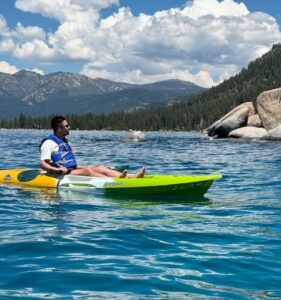
- Boating and Water Sports: It is popular with sailing, kayaking, paddle boarding and swimming.
- Hiking and Biking: Hiking trails (tahoe rim trail 165 miles around the lake).
- Casinos: Visitors can spend their time gambling and partying on the Nevada side (Stateline).
- Touring: Emerald bay state park, sand harbor and the scenic views found along the highway 89.
Environmental Concerns
- Water Clarity Decrease: It had more than 100 feet of visibility but now it is approximately 60 feet because of pollution and algae development.
- Urban Overflow: The development around the lake brings to the ecosystem nutrients.
- Climate Change: Decreased snow, increase in temperature and alteration of precipitation patterns pose threats to animals and tourism.
- Conservation Efforts: The work of Tahoe Regional Planning Agency (TRPA) and other conservation groups aims at restoring clarity and lessening pollution and preserving habitats.
Interesting Facts
- Second Deepest Lake in the United States: Crater Lake is the only lake that is more deeply rooted.
- Biggest Alpine Lake in North America: By size.
- The Emerald Bay: The most photographed place in the U.S.
- Split Lake: California and Nevada.
- Winter Olympic Legacy: Squaw Valley is the host of the winter Olympics in 1960.
Conclusion
Lake Tahoe is a beautiful natural treasure that crosses the California-Nevada border, and is characterized by its crystal-clear clean water, spectacular mountains, and recreational possibilities that can be had all the year round. It guarantees a destination that is enjoyed by skiing and hiking, boating and wildlife viewing, among the other nature lovers and adventurers. Lake Tahoe is a place that a tourist should visit despite the environmental challenges that are being encountered being done to continue its distinctive beauty into the generations to come as the lake continues to be a place of calmness and adventure.
Also read- Mind-blowing Aspen, Colorado 4u

