
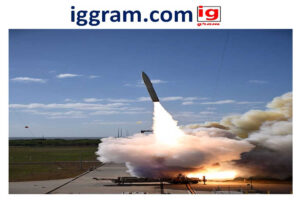
hypersonic weapons development to counter emerging rivalry in the global arena, the U.S. military is adjusting new hypersonic missiles like Blackbeard system onto mobile launchers like the HIMARS.
Introduction
The U.S. has been advanced in terms of long-range strike capability through the adaptation of the hypersonic weapons to a mobile launch platform. The second point that is considered as a breakthrough in battlefield mobility and strategic deterrence is the recent contract award of defense startup Castelion to develop its Blackbeard hypersonic strike weapon to be integrated into existing systems. This paper delves into the reasons why this is important, which platforms will be modified, the strategic and operation implications as well as the future challenges.
What Is Happening?
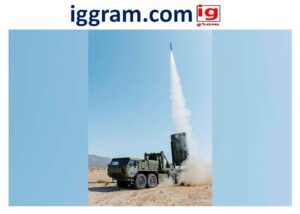
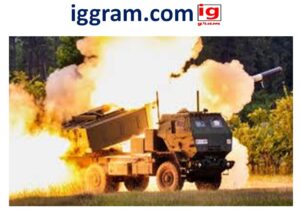
Castelion has announced that it won bids with the U.S. Army (and allegedly the U.S. Navy) to integrate Blackbeard with existing such systems as the High Mobility Artillery Rocket System (HIMARS).
The Blackbeard is said to be hypersonic strike weapon, which over-goes speeds more than Mach 5 in order to avoid normal defenses.
The main idea behind the strategy: the weapon will be launched in mobile platforms rather than fixed launch sites, enhancing agility, surprise and survivability.
The extended hypersonic program of the U. S. Army, such as the Long Range Hypersonic Weapon (LRHW), is aimed at being deployed in ground-launched mobile forces, as well.
Why It Matters?
Strategic advantage
The hypersonic weapons, which are those that travel at speeds that surpass Mach 5 and can manoeuvre in air, introduce a breakthrough in the strike capability. They make the adversaries slower in their reaction time and pose a threat to the current missile defence mechanisms. The ability of mobile launchers to increase the number of deployment options makes the system less predictable and flexible.
Mobility = survivability
The pre-emptive attack and detection of fixed launch sites are susceptible. Mobile launchers make the targeting picture of an enemy difficult improving deterrence. Platforms such as HIMARS should be adapted to ensure the U.S. can take advantage of the available infrastructure and doctrine.
Economic efficiency and speedy execution.
In one of the articles, the design intention of Blackbeard is brought out as an inexpensive and mass-manufactured weapon, which was cheaper than legacy ones. It implies that additional units can be deployed earlier before the days of exclusive and expensive models of previous systems.
Geopolitical race
The modification is against the backdrop of an arms-race, and both China and Russia are actively pursuing hypersonic ballistics. The relocation of the U.S. assists in keeping the competition at level.
Operational Impacts
Faster strike timelines
The mobile launchers and hypersonic weapons cut the time between the launch and hitting the target by a significant margin. It means the ability to respond more quickly to emergent threats, escalate or deter quicker, and have a better surprise.
Distributed fires doctrine
Rather than concentrating fire power, through fixed and big scale launch sites, forces can scatter launchers. This makes it difficult to aim at the enemy and more flexible in operations – appropriate in a multi-domain environment.
Combination with allied forces.
Since most of the U.S. allies operate HIMARS and other mobile systems, hypersonic weapon adoptions could increase the interoperability and common posture of deterrence between the partner countries.
Operations planning and logistics.
Mobile hypersonic launchers require modification of training, logistics, targeting, command and control and ROE. Units will have to train on how to deploy, evade, fire, move and survive in high threat areas.
Challenges & Considerations
Technical hurdles
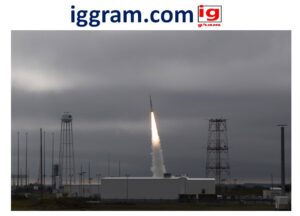
Hypersonic weapons are incredibly hard to engineer: extreme heat, control at extremely high velocities, navigation in hostile conditions, and the collocation of the mobile launchers. These are not trivial, despite the progress that is evident.
Cost and production scale
Although Blackbeard is planned as less expensive, hypersonic weapons are costly. It is difficult to scale production to quantities needed in the distributed deployment.
Targeting & doctrine
Mobile launchers cast doubt on the issue of hypersonic weapons allocation, launching, and usage. What is the purpose of the targets they target? What to do to guarantee accuracy and cut down on collateral damage? How can it integrate with larger-networks of strikes and intelligence/surveillance?
Escalation risk
Implementation of almost instantaneous strike weapons that are highly proficient creates risks in strategy. Their use can be seen as escalatory by adversaries, and it is more likely to result in unintended combat or miscalculation.
Defense counter-measures
With the U.S advancing the offensive capability, its enemies are equally advancing defensive and offensive systems. Competition in technology is continuing. As an illustration, the hypersonic glide vehicles could be a threat to the existing missile defenses.
Frequently Asked Questions (FAQ).
Q1. What are hypersonic weapons?
A1. Hypersonic missiles The missiles or glide vehicles are operated at supersonic speeds (faster than Mach 5-five times the speed of sound) of a vehicle that frequently has the ability to maneuver and thus is more difficult to detect and intercept.
Q2. What is the U.S. doing by adjusting them to mobile launchers?
A2. The change of hypersonic weapons to mobile launchers introduces flexibility, survivability, speed, and widespread footprint instead of being concentrated in fixed locations of launching. This supplements possible options of operation and makes it difficult to attack adversaries.
Q3. What are the mobile launchers that are in use?
A3. The U.S is striving to incorporate hypersonics into the HIMARS platform, CAML (Common Armoured Module Launcher) and other mobile ground launch systems.
Q4. What is Blackbeard?
A4. Blackbeard is a hypersonic strike weapon made by Castelion to be implemented with the already existing mobile launch platforms, such as HIMARS. It targets cheaper and large-scale production in contrast with the old systems.
Q5. What is the impact of this to U.S. strategic posture?
A5. With mobile hypersonic launchers, the U.S. would have better domain-to-domain rapid strike capability, greater deterrence, more challenging-to-plan-against adversary defences, and more dispersed and manoeuvrable war-fighting capabilities.
Q6. What are the potential risks?
A6. Risks to be considered are technical breakdown, cost increase, and growing number of conflicts, wrong estimation of the opponent and development of counter-strategies by the opponent, which diminishes the strategic advantage.
Conclusion
Hypersonic weapons placed into mobile launch systems is an important development to strike and deterrence methods of the United States military in the long-range. The U.S. is aiming to have a more agile, responsive and survivable strike force through the marriage of speed, mobility and pre-existing launch infrastructure. Although the technology and doctrine is still in its infancy, the ready implication of this to the future warfare is immense: the centre of power is shifting to those systems capable of being mobile and able to strike anywhere around the world in ways never experienced previously.
With this transition, the issue of cost, logistics, targeting doctrine, and escalation controls should be put into consideration. With speed becoming more and more a state of success in a world, mobile hypersonics could easily become one of the pillars of force projection in the next decade.
Also read- Exposed , is Glock discontinuing most handguns in 2025?

