
Learn about saltless water softener – a classmate of regular systems that are environment friendly. Discover how it functions, its main advantages, the best designs, and its suitability in the house.
Introduction:
In case you are fed up with cleaning up hard water stains, scale formation or patchy plates yet do not feel like going through the trouble and cost of refilling salt, saltless water softener would be the right choice.
These are environmental friendly, low-maintenance systems and are optimal in cases where the homeowners are interested in chemical-free water treatment.
In contrast to the traditional salt-based water softeners which replace magnesium and calcium with sodium, the saltless systems do not soften but condition water. This process helps to keep the minerals off surfaces – like the soft water without salt, without waste, without headaches of cleaning.
What Is a Salt free water softener?
A saltless water softener (also called a water conditioner or descaler) is a filtration device that inhibits scale deposition by changing the crystal arrangement of the minerals present in hard water in a process referred to as Template Assisted Crystallization (TAC).
Here’s how it works:
- As the water is left, it contains hard minerals such as calcium and magnesium.
- TAC changes the minerals into microscopic crystals, which are incapable of sticking to pipes and appliances.
- Result Water that feels healthier, and even safer on your pipes – mineral-free and natural, which does not add salt.
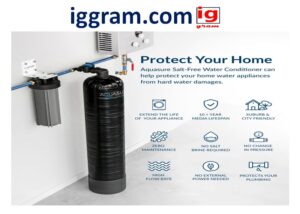
The operating principle of a Saltless Water Softener.
A saltless system differs, unlike the traditional softeners that exchange the ions, whereby the molecular structure of the minerals is altered.
Here’s the process in detail:
- Water moves to the media tank, and it is directed through a special catalytic surface.
- The calcium and magnesium ions are crystallized to small and non-reactive microcrystals.
- These crystals remain suspended in the water, and go through the pipes and fittings without causing any harm.
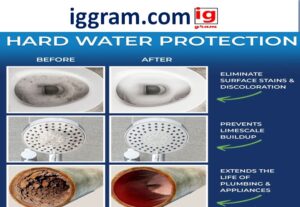
This eliminates the formation of limescales on the faucets, showerheads and appliances- increasing their longevity and performance.
The advantage of Saltless Water Softener.
- Environment-Friendly and Water-Less.
The old softeners utilize salt and release brine that may damage the environment. Salt-free water softeners do not use a lot of water or discharge toxic wastes.
- No Salt or Chemicals
Stop carrying 40-pound bags of salt or having to care about sodium in the drinking water. Saltless is a chemical-free solution, thus one can use it when undergoing a low-sodium diet or when one wants the natural water solution.
- Low Maintenance
These systems do not demand much maintenance once fitted as they do not need refills of salt, backwashing or electrical connections.
- Keeps Beneficial Minerals
The saltless conditioners do not strip the system of calcium and magnesium unlike in traditional systems which in turn are health and taste beneficial.
- Extended Appliance Life
Hard water has the potential to lead to limescales being formed in dishwashers, water heaters, and washing machines. Your appliances will last longer because with a saltless system, you will not need to spend money fixing your appliances or paying the utility bills.

whom Should a Saltless water guess?
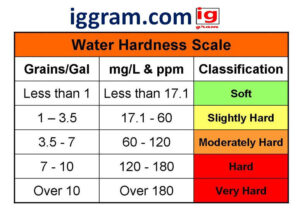
Applicable Saltless systems apply to mild to moderately hard water (up to 25 grains per gallon).
They’re ideal for:
- Households that are in need of a water system that is maintenance-free.
- Eco-friendly families shunned by salt discharge.
- Regions that have brine discharge limits.
- Individuals who are fond of naturally tasting water.
Even at a hardness of over 25 grains per gallon of your water, a conventional salt based softener can still prove more successful.
Salt vs. Salt-Free Water Softener: Major Differences.
| Feature | Saltless Water Softener | Salt-Based Water Softener |
| Primary Function | Conditions water (prevents scale) | Softens water (removes minerals) |
| Salt Usage | None | Requires salt refills |
| Water Waste | None | Yes, during regeneration |
| Maintenance | Minimal | Regular maintenance needed |
| Environmental Impact | Eco-friendly | Brine discharge |
| Minerals Retained | Yes | No |
| Taste of Water | Natural | Slightly salty |
Installation & Maintenance
Saltless water softener is easily installed and in most cases, it can be installed by an experienced DIYer/plumber.
Here’s what to expect:
- Installation Install close to your main water line (before it diverges into your home system).
- Make sure that it is pre-filtered in case your water has sediment or chlorine in it.
- After installation, there is no additional maintenance that is usually needed in 5-10 years, according to the system and the quality of the water.
Pricing of Saltless Water Softener.
The average cost between saltless water softeners and saltless water softener is situated between 800 and 2,500 and is based on:
- Brand and size
- Filtration capacity
- Media quality
Although the initial cost may be a little more than the conventional softeners, the expense will be saved in the long-term, through the absence of salt, water waste, and servicing costs.
Best Saltless Water softeners.
The following are best rated models to be considered:
- SpringWell Futuresoft Salt-Free System -Most overall performance.
- Aquasana EQ-1000- Ideal conditioning of the entire house of water.
- Pelican NaturSoft- Certified 99.6% scale prevention.
- NuvoH2O DPHB System- Small and greener home alternative.
Look at certified TAC media, NSF/ANSI certification as well as capacity appropriate to your household when deciding on a model.
FAQs
- Are salt free water softeners effective?
They do indeed do the job of inhibiting the formation of limescale, but they do not soften water as some people understand it. They make the water slick and minerals will not adhere to the surface.
- Does this mean that saltless and salt-free are the same?
Yes – the two terms imply that the system is run without salt or chemicals. Salt-free is a marketing term of a water conditioning system.
- And shall I drink water of a softener saltless?
Absolutely. The water is also clean and rich with minerals and safe to drink, unlike the traditional softeners that may contain sodium.
- Saltless water softeners have a lifetime?
The average life cycle of most systems is 10-15 years with minimal or no maintenance.
- Would a saltless water softener eliminate already present scale?
They do not get the heavy deposits away at once, but with time, treated water will be able to dissolve them and new scale will not form.
Conclusion
When you need a saltless water softener is you need a hassle free eco-friendly system that is saltless and can substitute the salt based system, then a saltless water softener is surely worth it.
You’ll enjoy:
- Cleaner fixtures
- Longer-lasting appliances
- Fresh, mineral-rich water
- 0 mg salt, 0 versa waste, 0 servo-service.
To the majority of the contemporary households, it is the best compromise between performance and sustainability- a smart addition to the water system in your house.
Also read- Best 3- types dp cable and more


1 thought on “Best 3- advantage of saltless water softener”