Develop the US China technology competition using the knowledge of Jamie Dimon about AI, semiconductors, and technology-dominating the world.
Introduction
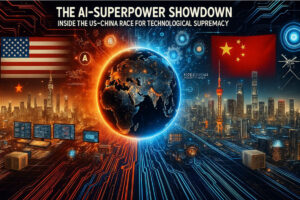
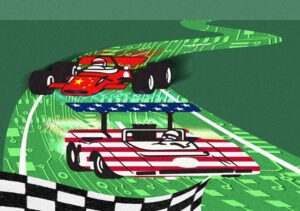
The competition between the US and China has turned to be the 21 st century rivalry and more so in technological arena. The competition between artificial intelligence and quantum computing, semiconductors and cybersecurity, the US China technology competition is defining the world markets, geopolitics and future innovation. JPMorgan Chase CEO Jamie Dimon recently contributed to the debate by discussing his perspectives on changing technological and economic relationship between the two economic giants nonetheless.
We discuss in this article what this competition implies to the innovation of the world as well as how Dimon explains the risk landscape, and the business, consumer, and international relations implications.
What Is the Dynamic behind the competition between the US and China on technology?
The US-China tech competition is a fight that is fueled by three fundamental factors:
- National Security
Both the countries consider technological superiority to be a critical factor in nation defense. The key aspects of this competition are AI, cybersecurity, and military-grade computing.
- Economic Leadership
The leader in technology owns the future industry, including robotics and biotech, clean energy and space technology.
- Global Influence
The geopolitics of technological infrastructure is 5G networks and cloud ecosystems among others. It affects trade blocs, online policies and international standards.
Jamie Dimon Views: Practical Analysis of the US-China Technology Relationship.
One of the most prominent figures in world finance, Jamie Dimon, has made multiple remarks regarding the tension that is growing between the two countries. Dimon adds that the engagement between the US and China is strained but can be managed in case policy makers are rational and strategic.
Key points by Dimon in the US-China Tech Rivalry:
- Competition is Inevitable
Dimon also recognizes that the technological competition between China and the US is the logical development of the economic growth of the countries. The emergence of China as a technological giant implies that there will be conflicts of interest.
- The US Must Innovate Faster
Dimon stresses that the US cannot be dependent on dominance in the past. To stay competitive:
- More investment in R&D
- Stronger STEM education
- Increased regulatory faster approval of emerging technologies.
- Improved public-private relationships.
- Decoupling Is Risky, but Selective Separation Is Necessary.
Dimon cautions that complete economic decoupling will be detrimental to the world economy. Selective decoupling, particularly in sensitive areas such as semiconductor fabrication, data management and telecommunication infrastructure is inevitable, though.
- China continues to be a serious economic ally.
Dimon is of the view that China will continue to be an important player in world markets despite the tensions. He suggests strategic collaboration instead of being confrontational at all times.
The Chinese Competition with the US in Technological Battlefields.
- Artificial Intelligence (AI)
Artificial intelligence is the jewel of the technological war.
- US is a leader of foundation model, innovation in the private sector and cloud infrastructure.
- China, on the other hand, has a scale advantage, government-sponsored AI implementation, and huge datasets of training.
The victor in the AI competition will probably take control of the industries of the future.
- Semiconductors
The semiconductor war can perhaps be considered the most important battlefield, which involves:
- The US ban on high-tech chips.
- Chinese investment in the domestic fabrication of chips.
- Global supply chain outsourcing.
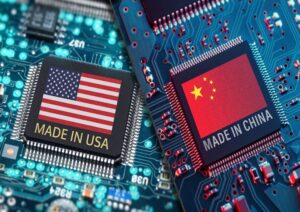
US is putting its emphasis on the protection of intellectual property whereas China is concentrating on self-reliance. According to Dimon, semiconductors will continue to be the most politically sensitive industry in years.
- Quantum Computing
Quantum computing has a future that is promising in the field of drug discovery, logistics, climate modeling and cryptography. Billingions are being spent in quantum research in both countries and the milestones are still getting faster.
- Telecom Infrastructure, 5G and 6G.
China has been leading in the implementation of 5G, and the US wants to keep on leading 6G implementation. Telecom infrastructure is a global trust issue that is affecting alliances in Europe to Southeast Asia.
- Cybersecurity
Both countries consider cybersecurity to be a part of the national strategy as cyberattacks continue to increase. The US is building up defensive capacities and international alliances whereas China is fortifying domestic laws of the digital security.
The Tech Competition and the Global Markets.
- Brotherhood of Global Supply Chains.
Companies are moving their production to India and Vietnam, Mexico and southeast Asia, to decrease the risk and meet the US restrictions.
- Greater Investment in local Production.
Both the US CHIPS Act and Made in China 2025 initiative of China are meant to decrease foreign dependency.
- Rise of Tech Protectionism
The export controls, blacklists, and restrictions on the technology licensing are becoming the norm in policy instruments.
- Higher Cost of Innovation
The prices of hardware, software, and R&D are on the increase as the supply chains are shifting and the technology has become politicized.
Prognosis: Will the US Secure its Leadership?
Jamie Dimon is positive in the long-term US innovation but he cautions that complacency is a killer. The US still leads in:
- World-class universities
- Venture capital investment
- Top-tier tech companies
- Intellectual property creation.
Nevertheless, the fast pace of innovation in China, its great manufacturing base, and state-supported efforts are a very tough opponent.
The future would be probably co-opetition, which implies cooperation and competition instead of armed confrontation.
FAQs
- What is fueling the US China competition in technology race?
The rivalry is motivated by national security, economic leadership, and world technological leadership in different fields such as AI, 5G, semiconductors, and quantum computing.
- How does Jamie Dimon respond to the US-China technology competition?
Dimon feels that the competition is unavoidable but can be dealt with. He cautions that complete decoupling is a mistake and the US needs to move toward innovating more quickly.
- US or China: Who is the leader in artificial intelligence?
The US has been at the forefront in basic AI models and innovation whereas China has dominated in government-sponsored adoption and big data applications.
- Why has semiconductors become a field of significant conflict?
Any digital device is powered by chips. Military might, economic development and technological dominance are controlled by access to sophisticated semiconductors.
- What is the impact of the US/China technology competition to the businesses in the world?
The companies will experience changes in supply chains, higher prices of production, and the necessity to meet more severe export regulations and cybersecurity demands.
- Will there be a complete decoupling of the US-China in terms of technology?
It is unlikely to be fully decoupled. Selective distinction in delicate fields such as chips and military technologies is more viable.
Conclusion
The US-China technology war is no simple rivalry between two super powers in the world- it is a characterization of a battle of technological, economic and geopolitical supremacy in the next few decades. The point Jamie Dimon makes is that this competition is unavoidable but it can be handled, as long as both countries take it with a sense of strategic discipline and an emphasis on innovation, as opposed to fighting. The United States remains having a significant advantage regarding the foundational AI, advanced research, and intellectual property of high value, while China continues gaining rapid momentum with manufacturing power and state-led technological growth.
Also read- Best 7- types of suction cups and uses


2 thoughts on “Best 4- US China technology competition, dimon Key points”