

Arsenal FC was founded in 1886 through to the Invincibles and the present revival under Arteta. Learn about major accomplishments, heroic periods, the strong sides, and the weak sides that created one of the most successful English football clubs.
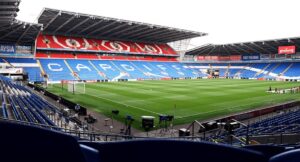

Arsenal (England) Football Club.
Founding and Early Years (1886–1919)
- Arsenal was established in 1886 as Dial Square by employees of the Royal Arsenal munitions factory in Woolwich, South East London.
- The club became professional in 1891, and was renamed Royal Arsenal, and later Woolwich Arsenal, in 1891.
- They became the first club to enter the Second Division of the Football League in 1893 and were the first South of England club to enter.
- Adequate finances and low attendances had to move to Highbury, North London in 1913 where they were just Arsenal.
The Chapman Era (1925–1934)
- Arsenal and English football were transformed by legendary manager Herbert Chapman.
- Innovations such as the numbered shirts, new tactics (the WM formation) and floodlit matches.
- Arsenal had their first First Division title in 1930 -31 and they went on to dominate the 30s with five league titles and two FA Cups.
- The reign ended with the sudden death of Chapman in 1934, but the legacy he left behind was what made Arsenal what it was during the modern and powerful days.
Post-War Years and Decline (1945–1966)
- Arsenal were champions of the First Division in 194753 and 195253, but the club fell.
- This was a relatively barren period in the 1950s and 60s; no major trophies, poor league finishes.


Revival Under Bertie Mee (1966–1976)
- Arsenal had not won a trophy in a long time, but in 1970 they won the Inter-Cities Fairs Cup, their first European title.
- They won their first League and FA Cup Double in 197071, beating Liverpool in the FA Cup Final.
- But in the mid-70s they could not maintain dominance.
The George Graham Era (1986–1995)
- Graham brought back the defensive backbone of Arsenal to create a team that is disciplined and strong.
- The 1989 First Division title was duly handed to Arsenal in dramatic style at Anfield (the famous last-minute goal of Michael Thomas).
- A second league championship in 199091, coupled with domestic cup and the European Cup Winners Cup of 1994.
- Graham: his administration met a scandalous demise due to financial misconduct, but his employees created a culture of toughness and discipline.
The Arsène Wenger Era (1996–2018)
- Wenger changed Arsenal into an attacking, diet, fitness and world wide scouting.
- Arsenal became the winner of the Double in 199798 and 200102.
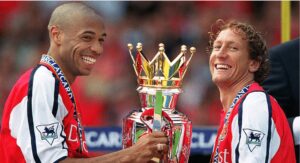
- The highest came in 200304 when Arsenal scored no defeat in the league -the so-called Invincibles season-a feat not yet replicated in contemporary English football.
- In 2006, they moved to the Emirates stadium, a symbolic move in terms of ambition, but an economic liability as well.
- Arsenal gained a reputation of beautiful, possession-based football, but did not compete well in Europe, losing the 2006 Champions League Final to Barcelona.
- Later Wenger years were condemned as years of near misses, defensive weakness and inability to win trophies next to competitors.
After Wenger and The Modern Era (2018-Present)
- Wenger retired in 2018, 22 years later. Successor Unai Emery managed to get to the Final of the Europa League 2019, where he lost to Chelsea.
- In 2019, Mikel Arteta succeeded and won the FA cup in 2020.
- Within the past few years Arsenal have declared themselves as a competitor in the premier leagues and in 202223 and 202324 have competed with Manchester City and a young and energetic army.

Strengths of Arsenal
- Rich Legacy –It is one of the most successful clubs in England: 13 League titles, 14 FA Cups (a record) and several European awards.
- Innovation – Chapman had a tactical revolution every now and then; Wenger has revolution in training and diet.
- Young Development- Powerful academy (e.g. Tony Adams, Cesc Fàbregas, Bukayo Saka, Emile Smith Rowe).
- Attractive Football –Known to be fluid and attacking particularly under Wenger.
- Global Fanbase – one of the most sponsored clubs globally.
- Financial Stability- A self-contained model, where the Emirates stadium offers a long term revenue.
- Hotspur Under Arteta – Pressing, technical ability and youth superstars (Saka, 0degaard, Martinelli).

Weaknesses of Arsenal
- Inconsistency – traditionally given to protracted barren periods (1950s, 60s, late Wenger years).
- Mental Fragility- They are usually criticized as being soft in the big games against their opponents.
- European Underachievement – One European trophy in the last 20 years despite successful performance at home.
- Over-Dependence on Youth- Sometimes relying on young teams with not much experience on their sides.
- Injury Problems– A history of having star players injured at inappropriate moments.
- Transition Struggles- Post-Wenger years pointed to the challenge of adjusting to new football powerhouses such as Manchester City, Chelsea, and Liverpool.
Conclusion-
Arsenal are an English football giant, known to be stylish, creative and traditional. They are strong in vision, youth and global influence but have been weak in inconsistency and poor performance within Europe.
Also read- Liverpool FC