

Bayern Munich- A name that rings in football history. This club was established in 1900 in the very centre of Munich and has grown out of small foundations to become the unquestioning powerhouse of German football and an international symbol of the sport.
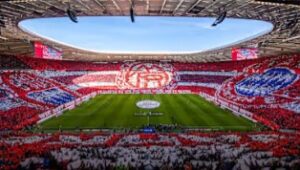

Bayern Munich (Germany)
Early Years (1900–1930s)
- It was formed in 27 February 1900 by 11 footballers headed by Franz John.
- Bayern became the champions of Germany in 1932 by beating Eintracht Frankfurt 2-0.
The Nazi regime was bad news to the club, with a large number of Jewish members and officials (among them the club president Kurt Landauer) driven out.
Post-War Struggles (1940s–1950s)
Also; when the Bundesliga was formed in 1963, Bayern was omitted despite being considered a provincial team in comparison to a club such as 1860 Munich or Hamburg.
They were promoted in 1965 and began to rise.
Golden Era (1970s)
The international breakthrough of the club happened in the 1970s with coach Udo Lattek and players such as Franz Beckenbauer, Gerd Muller, Sepp Maier and Uli Hoeneß.
- Won three consecutive European Cups (1974, 1975, 1976).
Gerd Muller was made one of the greatest strikers of all time.
Domestic Domination (1980s–1990s)
Yet, for Bayern, this turned out to be the most formidable club in Germany with several Bundesligas.
They also lost the Champions League Final in 1999 to Manchester United after being ahead till stoppage time.
And in 2001 they were redeemed by winning the Champions League against Valencia.
Modern Era (2000s–2010s)
Investment in their youth academy and the likes of Philipp Lahm, Bastian Schweinsteiger, and Thomas Muller took the club to the next level.
- That Bayern became a European superpower was sealed by 2013 Treble (Bundesliga, DFB-Pokal, Champions League) under Jupp Heynckes.
- Further rule by Pep Guardiola (201316), and without another Champions League title.
Recent Years (2020s)
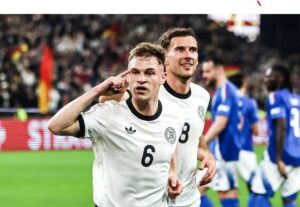
- 2020 Treble (the team of Hansi Flick) and Robert Lewandowski, Manuel Neuer, Joshua Kimmich – one of the best Bayern teams.
- Performed poorly in Europe following the exit of Lewandowski in 2022.
Still dominate domestically, though occasionally they are chased by Borussia Dortmund and RB Leipzig.


Strengths of Bayern Munich
- Financial Power & Stability
o Property of club members (not a single-owner company), highly commercialised (Adidas, Audi, Allianz).
o Very little debt relative to other giants.
- Consistent Domestic Dominance
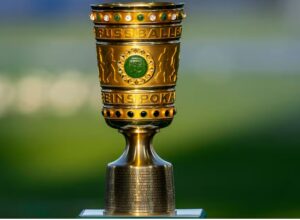
o Record 32 Bundesliga titles and 20 DFB-Pokals.
o Recruits the finest talents in Germany and undermines opponents.
- World-Class Youth Development
o Senior players such as Thomas Muller, Philipp Lahm, Bastian Schweinsteiger, Toni Kroos, David Alaba were produced.
- European Pedigree
o 6 Champions League titles (1974–76, 2001, 2013, 2020).
o Repeatedly attains higher stages of UCL.
- Strong Identity & Fan Base
o Well-known motto: Mia san mia (we are who we are).
o Huge global fan base, particularly in Europe and China.

Weaknesses of Bayern Munich
- Over-Reliance on Bundesliga Talent
o They have a reputation of diluting their opponents (acquiring Dortmund, Leverkusen, Schalke, etc. stars).
o Makes Bundesliga less competitive.
- Managerial Instability in Recent Years
o Frequent coaching changes since 2017 (Ancelotti, Kovac, Flick, Nagelsmann, Tuchel).
o Lack of long-term tactical continuity.
- European Inconsistency
o In UCL knockouts, Bayern has failed in domestic supremacy competitions with Real Madrid, Manchester City, PSG.
- Aging Core Players
o Reliance on veterans (Neuer, Müller, Lewandowski until 2022).
o Transition to a younger core sometimes rocky.
- Bundesliga’s Limited Competition
o This lack of competitiveness in the league is detrimental to Bayern in Europe where the teams have a greater challenge every week.

In a nutshell: The history of Bayern Munich is that of strength, supremacy, and change. They are the undisputed powerhouse of Germany, and they have strengths in financial health, youth development, and winning culture. They are weak primarily because of European inconsistency, managerial instability, and reliance on weakening domestic competitors.
Conclusion
Bayern Munich is one of the most successful football clubs of all time – an embodiment of German strength, power and victory. Since its simple start in 1900, the club has earned a good name in the field and outside the field.
Its advantages are in financial stability, young development, and unmatched domestic history, and its limitations are in recent instability of the management, and a few glitches on the European front.
Finally, the motto of Bayern Munich is the mia san mia – a boastful statement of self-confidence and custom. And with this knowledge of a solid foundation, a fan base, and the insatiable drive to glory, Bayern is not only the benchmark in German football, but also a consistent contributor to the international scene.
Also read- Manchester City FC