

Best 5- things of coastal gold : its nature, formation, occurrence, and some guidelines on prospecting the ancient shoreline of gold reserves.

The Gold Coast: The Secret Treasure of Nature.
The term coastal gold creates images of waving sands, surf being sun-kissing and bits of gold or precious metal under the waves or as you see in coastal gravels. Although it might be considered romantic in geological and mining terms, the word has a literal sense, meaning instances of gold in the coastal plains, beaches, and sediments in the area of the sea. In this article, we shall find out the definition of coastal gold, the whereabouts, the formation process of the commodity, and what this may imply to the prospecting and the avid person.
What is Coastal Gold?
Fundamentally, coastal gold is defined as gold deposits or concentrations that are found in an coastal or shoreline environment (such as that of old beach terraces, marine gravels, or coastal plain sediments). These deposits can either be due to an ancient shoreline or wave action or even fluvial reworking or even the concentration of gold particles by marine currents.
Indicatively, research indicates that the coastal plain sediments in South Carolina contain gold in them – some areas are found containing up to 1.20 ppm of gold in the coastal plain sediments of the areas around Jefferson.

Gold in the Coastal areas How does gold get there?
It has a number of geological routes:
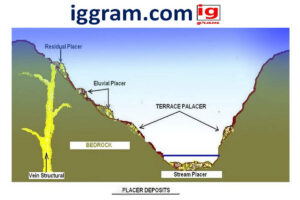
- River transportation and beach concentration: Rivers have inland deposits of gold, which are deposited in gravels, and may be reworked by the waves and currents on ancient shoreline, or beaches. The deposits get enriched with time.
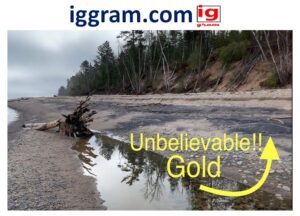
- Beach and marine terrace deposits: Marine terraces and or old sea-beaches may preserve deposit of gravels and sands that were formerly at sea level; they may contain gold concentrations. It is observed in the research: Because these deposits were deposited at the edge of the ocean we will find old sea beaches in these gravels.
- Re-concentration through currents and tides: Tides and waves can also occur in the coastal environment, which can winnow off the light and leave behind the heavy gold grains, similar to river bars, except in a marine/shore environment.
- Placer gold of local geology: In case there are gold-bearing rocks in the area of the coast, the erosion and transportation might bring the gold to the shore where the coastal processes work upon it.
Key Regions for Coastal Gold
Some of the more well documented areas are:
- Southeastern U.S. (Coastal Plain): According to the U.S. Geological Survey, there was gold found on the Coastal Plain sediments (South Carolina) in up to 12 ppm on the surface of the bedrock beneath the coastal cover.
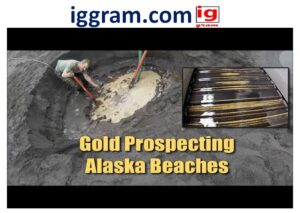
- Marine placer deposits in Alaska: An example is the area off of Nome, Alaska, which is composed of good gold-bearing beaches and submarine placers formed on the coastal plain, which have been refined by marine action.
These demonstrate that the coastline gold cannot be confined to a single nation or even geological environment – the same process can take place on other continents.

Why Explore Coastal Gold?
To prospectors and small-scale miners, the coastal gold is somewhat potentially valuable:
- Available environments: Onshore opportunities: Beach gravels and Shoreline are also accessible as compared to isolated mountain lode protocols.
- Reworked concentration: With natural workings, there is a possibility that natural processes have already concentrated the gold, which means one has to work a smaller amount of material.
- Historic neglected areas: There can be some old beach terraces or coastal plain gravel, which can be exploited.
Nevertheless, this has some challenges (see next section).
Difficulties with Coastal Gold Mining.
There are no easy ways to mining the coastal gold deposits:
- Fine gold and dispersion: The more distant the gold has travelled the finer and more dispersed it becomes, thus becoming hard to recover.
- Environmental & regulatory limitations: Coastal areas tend to border on sensitive habitats, tideless areas, or conserved beaches and thus permit acquisition and management of environmental impact are more expensive.
- Variable geology and economics: Even the occurrence of the gold in beach gravels does not assure the economic viability of the concentrations. The U.S. observations indicated that gold may be found but nonetheless, extraction via economics can be tough.
- Change and erosion of shorelines: The continuing process of coastal erosion, sea-level rise and shifting sand could alter or cover promising gravels or could cause them to be unstable.
Tips on Prospecting Coastal Gold.
Whatever you hobby or your prospects aren’t gold pinners, here are best practices:
- Research old shorelines and beach terraces – Look for raised beach benches, marine terraces, or old shoreline gravels just inland of the modern beach.
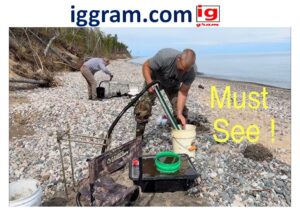
- Timber test to test heavy mineral concentrations- In order to test a test on the presence of heavy minerals (magnetite, ilmenite) to identify the presence of gravels, the test involves using a gold pan or sluice box.
- Identify clay layers as false bedrock – In certain types of the coastal gravels there is an overlay of pay zone on a layer of clay or false bedrock that the gold may collect.
- Take tidal and wave zones into account – Waves can have reworked intervening benches some of which are only a few feet down the low water mark.
- Be conscious of the area and the environment – It is always good to research the local laws concerning mining of the area, areas that are not supposed to be mined, and the use of motorised machines.
- Target the heavier ones – Since coastal gold can be fine, that is with finer mesh sluices/pans or improved recovery techniques can be used to recover small particles.

Gold Coast in Contemporary Times.
With numerous inland gold deposits having been massively exploited, the coast-bound gold in a new frontier can be seen as fascinating. The technological advances (fine gold recovery, remote sensing, geophysical surveys) can be used to access old-beach or marine terrace deposits that have been overturned. Furthermore, the growing popularity of placer gold and the small-scale mining revives the concern about near-shore environments.
Also, with the rise of sea levels and the change in the location of storms, there is a possibility of uncovering gold-bearing gravels that become exposed or reworked. Nevertheless, the main factor is sustainable and environmentally friendly mining.
Frequently Asked Question (FAQ).
Q1. So what is meant by the idea of coastal gold?
A: Gold found in beaches and along shorelines settings, including old beach gratuities, coastal plain of sand, and sea levels, is known as coastal gold.
Q2. In what locations are the natural gold deposits along the coastline?
A: They occur in areas where the erosion and transportation of the gold bearing rocks to the coast and where the shore line or sea actions have re-worked and concentrated the gold. Such examples are the coastal plain sediments of the Southeastern U.S. and beach-placer deposits of Nome, Alaska.
Q3. Is gold any easier to mine on the coast than in the inland?
A: Not necessarily. Coastal deposits can also be easier, but they are usually finer and scattered deposits, and may have to be recovered with fine recovery equipment and processed with care.
Q4. Which are the best ways of recovering coastal gold?
A: Panning, more finely mesh sluicing and work done on high-density mineral layers above clay over-lying false bedrock layers in ancient beach gravels work successfully. In addition, mapping of old terraces of shorelines, tidal reworked areas augers success.
Q5. Is there any environmental threat to gold mining on the coast?
A: Yes. Coastal areas are usually highly ecologically sensitive areas, which can be eroded, experience sea-level change and habitat management. Any mining should take into consideration the local laws, disturbance of sediment, and environmental influence.
Q6. Can the coastal deposits of gold be applicable nowadays?
A: Yes – particularly with the advancement in technology of exploration. Deposits which were not previously appreciated may be concealed by marine and beach-placer settings. The economic about sustainability is, however, dependent on concentration, scale and local circumstances.
Q7. Where shall I know where my beach or shoreland can be of gold?
A: Consult geological maps, ancient terraces of the shoreline, ancient deposits of rivers draining to the coast and test gravels were examined to determine the amount of heavy minerals. Local geological surveys and mining registers could be of some help.
Conclusion
Coastal gold can be a metaphorical expression, yet it perfectly describes a geological phenomenon which is real and fascinating the fact that rivers, waves and tides move gold to the coastal plains, beaches and marine terraces. Although by no means the proverbial bonanza, these deposits provide ready prospects of prospecting and exploration particularly when one is guided by good geological knowledge and appreciation of the environment. It may be pan of gold under the sunset, or the pages of antique shoreline, it is all there in the shore, the gleam of the so-called coastal gold to be discovered.
Also read- Best 3- advantage of saltless water softener