
Parvo in dogs, Know the symptoms, causes, treatment as well as prevention. The full instruction on how to keep your puppies safe against canine parvovirus.
Introduction
Dogs have a disease called parvo- also referred to as canine parvovirus (CPV) it is one of the most transmissible and lethal diseases that affect puppies and unvaccinated dogs. The virus infects the gastrointestinal tract of the dog causing severe vomiting, bloody diarrhea, dehydration, and life-threatening complications in most cases. The knowledge of the ways parvo is transmitted, the symptoms of its development at early stages, and the correct treatment procedures will help to save a dog.
This guide provides all the information dog owners should have concerning parvo virus in dogs including symptoms, to prevention.
What Is Parvo in Dogs?
Parvo can be described as a highly contagious viral disease that is caused by canine parvovirus type 2(CPV-2). The virus primarily affects:
- 6 weeks to 6 months old Facings.
- Unvaccinated adult dogs
- Dogs having weak immunity.
The virus attacks fast multiplying cells in the intestines, bone marrow, and lymph nodes leading to severe illness. In the absence of treatment, the death rates may extend to 90%.
How Do Dogs Get Parvo?
Being aware of the way dogs get parvo is one way of preventing its transmission.
Dogs can get parvo through:
- The direct contact with the infected dogs.
- Contamination of surfaces (floors, shoes, bedding, bowls).
- Exposure to infected feces
- People who bring the virus with them in the form of clothes or hands.
Parvovirus is highly very tough and can survive in the environment up to one year. This explains why even the indoor puppies may also be infected whenever the virus is imported into the house on shoes, hands, or objects.
Essentials in the Early Signs and Symptoms of Parvo in Dogs.
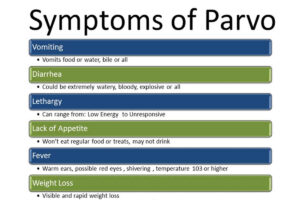
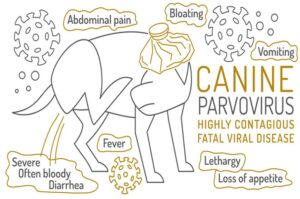
Early detection is critical. These are the most typical parvo symptoms of dogs.
- Severe, Persistent Vomiting
Dogs cannot retain food or water.
- Blood or Fecal impurity Diarrhea.
Frequently dark and bright red as a result of intestinal bleeding.
- Extreme Lethargy
Dogs look feeble, exhausted and not interested in food or games.
- Fever or Low Body temperature.
They both may happen based on severity.
- Loss of Appetite
Dogs completely refuse food.
- Rapid Dehydration
The vomiting and diarrhea dehydrate rapidly.
- Abdominal Pain & Bloating
The dogs might either hunch or shy away.
You should take your dog to the vet urgently in case he or she exhibits two or more symptoms, as parvo has a rapid onset.
How Is Parvo Diagnosed?
A fecal ELISA test, which is a test of viral antigens, is usually used by veterinarians. Other examinations can be:
- Bloodwork
- Imaging (if needed)
- Confirmation by way of PCR.
The early diagnosis improves the survival rates.

Treatment for Parvo in Dogs
Parvo has no direct cure and can be treated using aggressive supportive care to allow a dog to survive.
Treatment options of parvo are:
- IV fluids in order to correct dehydration.
- Anti vomit to prevent vomiting.
- Antibiotics as prophylaxis of secondary infections.
- Nutritional support
- Electrolyte therapy
- Isolation as a means of prevention.
Survival rates can be up to 75-90% with the proper treatment.
Home Remedies Are NOT Enough
Treatment of parvo cannot be achieved only through home remedies. Patient… always see a doctor.
How Long Does Parvo Last?
Dogs undergo the symptoms between 7 -10 days based on treatment. Unless attended to by a veterinary, puppies may fall into a poor condition within 24-48 hours.
Dogs can be contagious within a period of 14 days even when they are not feeling well.
Preventing Parvo in Dogs
The best way of securing your dog is by prevention.
- Vaccinate Your Dog
This is the #1 defense against parvo.
Professionally approved vaccination of a puppy:
- 6–8 weeks
- 10–12 weeks
- 14–16 weeks
- Booster after 1 year,then every 1-3 years.
- Not to go to the first place.
Do NOT take puppies to:
- Dog parks
- Pet stores
- Sidewalks
- Boarding facilities
- Grooming salons
Puppies are in danger of dying until they are fully vaccinated.
- Disinfect Your Home
Add bleach (dilution: 1:30) – one of the disinfectants that have been proven effective at killing parvo.
- Keep Your Yard Clean
Always dispose feces as fast as possible.
- Minimise Physical contact with dogs that were not vaccinated.
The Parvo is easily transmissible by dogs that have an uncertain medical history.
Contagious To Other Pets or Humans?
Parvo cannot infect humans. However, it can spread to:
- Other dogs
- Canid (wolves, coyotes, foxes, etc.) Wild ones.
- Puppies with weak immunity
The cats have their own parvovirus but does not propagate the canine type.
Long-Term Effects of Parvo
Majority of the dogs that survive have normal, healthy lives. However:
- Some of them can be weakly immunized.
- Intermittent intestinal hypersensibility.
- Increases the likelihood of other infections incurring treatment.
Follow-ups and proper nutrition will see the dog recover fully.
When to See a Veterinarian
Seek emergency care if your dog shows:
- Vomiting + diarrhea
- Blood in stool
- Sudden lethargy
- Refusal to eat
- Signs of dehydration
Early intervention has a drastic effect on survival.
FAQs
- How will we know the initial symptom of parvo among dogs?
The first manifestations are lethargy and loss of appetite.
- At the same time, is a drivers dog subject to parvo when it is vaccinated?
Yes, but it is rare. Vaccinated dogs normally develop less severe symptoms.
- What is the time taken by parvo to kill a dog?
In extreme situations, parvo may be lethal in 48-72hours without medication.
- How long is parvo contagious?
Dogs have up to 2 weeks to shed the virus even when the symptoms are observed.
- Can parvo live on clothes or shoes?
Yes. Parvo has the ability to live on a surface at months and must be disinfected.
- Is parvo painful for dogs?
Yes, because of intestinal inflammation, cramping and dehydration.
- Can adult dogs get parvo?
Yes. The adult dogs that are unvaccinated are still at risk.
- I need to disinfect my home with parvo.
Apply bleach solution (1:30) on the surfaces. Majority of the domestic cleaners do not kill parvo.
- Parvo-survival on untreated dogs?
Without treatment, survival is extremely unimaginable. The emergency veterinary care is a necessity.
Final Thoughts
Parvo in dogs is an aggressive and contagious virus, which is very preventable. Most dogs can be vaccinated, kept hygienically and with early intervention, many of them will be able to lead full and healthy lives. In case you believe that your dog has parvo, hurry to a clinic because a timely response can save the life of your dog.
Also read- Best 4 dog muzzle


1 thought on “Best 7 Parvo in dogs symptoms”