

Exposed 3-contribution of peter McMahon , There are not many names as eminent, when it comes to taking the limits of computation to their furthest, as that of Peter McMahon.


Early Life and Education
McMahon was born and brought up in South Africa where he pursued his undergraduate degrees (B.Sc Eng, M.Sc Eng) in Electrical and Computer Engineering at University of Cape Town.
He later immigrated to the U.S. where he pursued his M.S. and Ph.D. in Electrical Engineering (minor in Physics) at Stanford University in 2008- 2014.
McMahon was exposed to electrical engineering and physics at a young age, which made him the most appropriate employee.
Career & Research Focus
Now a professor at Cornell University in the School of Applied & Engineering Physics (since 2019), the work of McMahon has been in three areas that are intertwinned:
1.Neural networks/optical networks Special-purpose computing
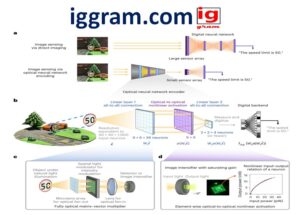
The lab of McMahon investigates the physical systems (particularly optical systems) as neural networks or compute machines, in completely different ways to the traditional digital computers. As an illustration: training physical systems, optics to make computations, and investigating energy limits of computing.
- Quantum sensing and quantum computation.
At the quantum scale, his team researches the spins in semiconductor, superconducting circuits, optics and microwaves – to create quantum computers or simulators and combine sensing and computing.
- Essential physical computational constraints.
The general purpose of the query, perhaps, is to pose this question: what other computing modalities are available, should you not be using the standard von Neumann architecture? What are the final speed, energy & size limits to building computation on foundations at physics?

Key Achievements & Awards
- Some recent developments of McMahon and colleagues include the state-of-the-art work, e.g., optical neural networks working with or around photon energies.
- In 2025 he again received the professional society Optica Adolph Lomb Medal, on basis of having demonstrated, new types of optical-physics-based computing machines, which would outperform conventional computers.
- He is also a recipient of such prestigious fellowships and awards as the Sloan Research Fellowship, Office of Naval Research Young Investigator Award, Google Quantum Research Award and designation as a CIFAR Azrieli Global Scholar.
Such awards are based on more than technical performance and are an indicator of the potentially significant contribution to future computing paradigms that his work has.
Why His Work Matters
Power & Fastness: a new frontier of computing.
The current computers are amazingly powerful, but they are experiencing bottlenecks: heat, power use, memory-processor separation (von Neumann bottleneck), delays. The optical and analog-physics computing models of McMahon seek to avoid some of those bottlenecks, insofar as they can implant their computation in physical dynamics.
Special-purpose and general-purpose computing.
Instead of replacing all the computers, the vision of McMahon tends to be special-purpose machines: optical neural networks to process images; analog quantum simulators to solve optimization problems; in-hardware-computing sensors.
Entrepreneurial and scientific solutions.
Fault-tolerant quantum computers are yet to be achieved in the near future. The work by McMahon has been a crossing of the classical/quantum worlds – how physical systems (optical, electronic, quantum) can compute better today, and how to be ready to gain even greater benefits of quantum in the future.
Innovating the next-generation compute ecosystem.
New computing paradigms are becoming significant as the volumes of data, AI and energy requirements increase. The study conducted by McMahon can be used to conceptualize what the hardware of the next generation could resemble: neural processors made of light, analog co-processors, senses-compute systems enhanced with quantum capabilities.


Challenges & Considerations
- Scalability & manufacturability: This provides a number of optical/analog systems which have shown promising laboratory performance, however, in the real world manufacturing, error correction, and interconnection with existing digital infrastructure is hard.
- New programme programming and usability: New hardware needs new programming models. Digitization to optical or quantum hardware takes algorithm re-thinking.
- Implication: Despite any potential performance or energy improvements being shown to be quite large in scale, adoption could also be slow. The work of McMahon is useful in defining the metrics and the proofs of concept.
- Interoperability: New modalities in computing will require to interface with the standard digital systems. It is not a trivial task to bridge that integration.
Irrespective of these issues, the contributions of McMahon move the state-of-the-art forward and assist in the preparation of wider use of next-gen computing.
Impact & Future Outlook
In the future, the research by McMahon can result in:
- Modules based on optical neural networks placed on cameras, sensors or mobile devices with ultra-low power real-time processing.
- Data center analog-physical co-processors which execute optimization tasks, simulation or machine learning tasks more cheaply.
- Quantum-hybrid measuring devices that calculate measurements -e.g. imaging, genomics, materials research.
- Education and hardware design New computing education and hardware design, as more engineers learn physics-embedded compute.
Finally, in case any of these paths meet the scaling criterion, the work by McMahon may alter the computing structure in decades.


FAQ
Q1: Who is Peter McMahon?
A: Peter McMahon is an Assistant Professor of Applied and engineering physics in Cornell University. His work is on neural networks in optics, quantum computing.
Q 2: What is the importance of the rule of optical neural networks to his work?
A: ANN works with light (photons) and optical elements, implement the computation of a neural network, which in many cases allows lowering the energy consumption and achieving greater parallelism than an electronic system. This type of system has been published by the lab of McMahon.
Q3: What are the awards that Peter McMahon has achieved?
A: Until 2025, he was given the Adolph Lomb Medal of Optica. He has also received the Sloan Research Fellowship, Office of Naval Research Young Investigator Award and was a CIFAR Azrieli Global Scholar.
Q4: Which are the key issues that his research will address?
A: Some of the main issues are how to design physically-based compute systems that are scalable, how to integrate them with the existing digital infrastructure, how to program them, and how to show real-world performance and energy benefits.
Q5: Who cares about the research conducted by Peter McMahon?
A: With the increase of data, AI stress and energy limits, there is a need to provide new compute paradigms. The work by McMahon assists in the establishment of quicker, more effective, and potentially radically different forms of computing equipment – which may have consequences on the mobile gadgets as well as datacenters to quantum detectors.
Conclusion
Peter McMahon is on the border of physics, engineering and computer science – using optical systems, quantum mechanics and hardware analog theorizing what computation can be. His direction implies that compute hardware is not merely faster, it is entirely different. McMahon will always be a name to reckon with to anyone willing to venture into the next generation of computing.
Also read- Simple 5-things to learn about surgical tech programs