
what is climate change, and what is so bad about it? And now the science, causes, and effects of this worldwide occurrence -and what can be done about it.
Defining Climate Change
Climate change is a long-term change in temperature, rainfall, winds, and others in the climate system of the earth. Although weather is also subject to changes with time, the sudden rise in temperature that we now experience is greatly caused by our human action, especially the combustion of fossil fuels like coal, oil, and natural gas.
Such fuels emit greenhouse gases (GHGs), such as carbon dioxide (CO₂ ), methane (CH₄), and nitrous oxide (N₂O), which reflect heat in the atmosphere. This is called greenhouse effect and although this is necessary to keep the Earth at a livable temperature, emissions caused by human beings have escalated the process to a catastrophic level.
The Science of Climate Change
The atmosphere of the earth resembles a blanket -it captures and releases solar heat. Some of the natural greenhouse gases sustain an average temperature of the earth at 15 °C (59 °F). Without this blanket we would live on a frozen planet with the average temperature of -18 °C (0°F).
Nevertheless, the level of greenhouse gases concentration has grown exponentially ever since the Industrial Revolution of the 18th century due to human activity. For example:
- The amount of CO₂ in the atmosphere has increased to more than 420 parts per million (ppm) now as compared to 280ppm during the pre-industrial age.
- The level of methane is increased more than twice, most of them through agriculture, livestock and waste management.
- Emissions of nitrous oxide by fertilizers have also increased tremendously.
This increase in GHGs increases the green house effect that leads to warming of the planet more than ever before, a condition that has been termed global warming which has been a major contributor to climate change.
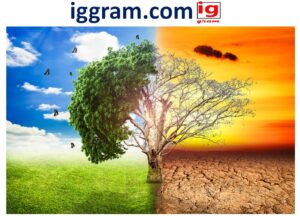
Natural vs. Human Causes
It is worth noting that climate change may take place naturally through processes like volcanic eruptions, changes in solar radiations and ocean cycles like El Niño. These are the processes of nature that have affected the climate of the earth over millions of years.
But the scientific facts are overwhelming that the present climate change is mainly a human-made phenomena. It has been concluded by the Intergovernmental panel on climatic change (IPCC) that the primary cause of global warming since the middle of the 20th century is the human activity with a certainty of more than 95%.
Members who make the largest contributions are:
- Burning of fossil fuels to produce electricity, heating and transportation.
- Also, deforestation that lessens the amount of CO₂ that can be taken in by the earth.
- Industrial activities contributing to emission of green house gases.
- Methane and nitrous oxide agricultural methods.
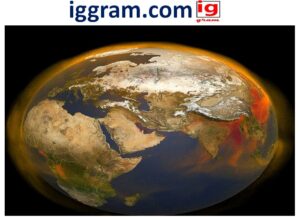
The Evidence: Why we know climate change is taking place.
Climate patterns are not a new study of scientists and the signs of global climate change are overwhelming. Key indicators include:
- Rising Global Temperatures
The past ten years had been the hottest ever. Based on NASA and NOAA, the average surface temperature of the planet has increased by about 1.2°C (2.2°F) since the late 19 th century.
- Melting Ice and Glaciers
Glaciers and polar ice caps are in the world are receding. The minimum point of the Arctic sea ice that is the smallest every summer has diminished by approximately 13 percent every decade since 1979.
- Sea Level Rise
The warming and melting of ice, as well as the expansion of the seawater, have led to the rise of the sea levels about 20 centimeters (8 inches) in the last century, endangering the settlements around the coastlines in the world.
- Extreme Weather Events
There is an increase in heatwaves, hurricanes, floods, and wildfires that are even more severe. Climate change increases such events by changing the conditions of the atmosphere and the ocean.
- Ocean Acidification
The oceans absorb approximately 30% of the emissions of CO₂, which result in chemical reactions that reduce the amount of pH and destroy life in water including coral reefs and shellfish.
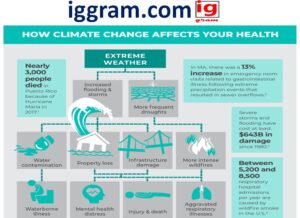
The Aftermath of Climate Change.
Climate change has enormous effects that go way beyond the rise in temperature, and they impact the ecosystems, economies, and human societies.
Environmental Impacts
- Biodiversity loss: Due to changing habitats and their disappearance, many species find it hard to keep up or move.
- Disruption of ecosystems: Coral reefs, rainforests and the Arctic are some of the most adversely affected.
- Circulation of oceans: The warming of the earth may influence ocean currents in the world, which has an impact on weather and marine life.
Economic and Social Impacts
- Agriculture: Alterations in the rainfall patterns and heat stress lower crop yield.
- Patient hazards: Intensified heat, air pollution, and disease transmission is dangerous to human health.
- Migration and displacement: The rise of the sea level and lack of resources are likely to force millions of people to move.
- Infrastructure damage: Damage of infrastructure can be caused by flooding, wildfires, and storms that damage homes, roads, and power grids.
The Global Response
It is a global issue and needs to be addressed globally through joint effort. Some of the international initiatives to reduce emissions and create resilience include:
The Paris Agreement (2015)
Almost all the nations were willing to cut down the global warming to an amount of less than 2°C ideally less than 1.5 °C than that experienced before the industrial era. Every country has its targets in terms of emissions, which are called Nationally Determined Contributions (NDCs).
The Transition of Renewable Energy
Nations are also spending much in solar energy, wind energy, hydropower, and geothermal energy to minimize the use of fossil fuels. Clean energy does not just reduce emissions but also brings more job opportunities and industries.
Conservation and Reforestation
Conservation of forests, wetlands and oceans also assists in the taking of carbon and conservation of biodiversity. Sustainable land use and conservation is promoted through programs such as the REDD+ program by the UN.
Technological Innovations
The new technologies, including carbon capture and storage (CCS) as well as electric car and building designs, will play an important role in mitigating emissions.
Conclusion
Climate change is not in the past but now it is present. Its effects are international yet its remedies are local, with each decision we make. The initial step to meaningful action is to understand what climate change is and its impact on the way we live.
The future of our planet lies in collectivity, not only on the part of the governments and industries, but also on the part of individuals. Through the adoption of renewable energy, resource conservation, and ecosystem protection, we can reduce the rate at which we are warming and also make the world habitable to the future generations.
Climate change is real. Together we can make the future climate different.
Also read- Discover Weather Tomorrow


1 thought on “Exposed 5 step’s What Is Climate Change?”