

Understand What is a recession?, its causes, effects and preparation. Learn main indicators of recession and suggestions to save your money in time of recession.

Introduction: The Real Meaning of Recession?
When the term recession is given it causes fear in the minds of people. There are warnings of falling stock markets, increasing unemployment and sluggish economies in the headlines of the news. However, what is a recession, anyway?
In simple terminologies, recession is a state of economic decay where the entire economy of a country including production, spending, and subsequently the employment levels take a significant and long-term downturn. Knowledge on what a recession is, its causes, and its effects on individuals and firms may enable you to make great financial choices and to be better equipped to deal with the future.
What Is a Recession?
According to the economists, recession is a major weakness in economic activity that cuts across the economy but over a period of more than a few months. It can be observed through the signs like:
- Gross Domestic Product (GDP)
- Employment rates
- Consumer spending
- Industrial production
- Real income
The institution that officially states the existence of recessions in the United States is the National Bureau of Economic Research (NBER) which examines various data points before it can be declared a given time as a recession.
Concisely, the economy is said to be in recession when the producers of the business make less, consumers spend less, and workplaces become more difficult to secure.

Technical Definition : The Two Quarters of Negative Growth.
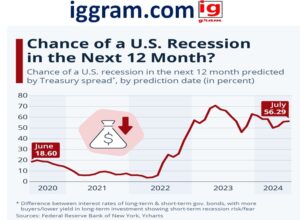
Conventionally, recession is claimed to be experienced when the GDP of a nation declines in two quarters (six months). GDP is the sum of the value of goods and services that are produced within an economy and hence a consistent fall indicates that the economic activity is contracting.
The definition in the real world can however be different – some recessions may be brief and superficial, others may be in years and can result in permanent loss of jobs and income.
Causes of a Recession
A recession does not have a single cause. There are several reasons as to why the economy is slowed down. The following are the primary causes of recession:
- High Inflation
Purchasing power of the consumers reduces when prices are increasing at a high rate (inflation). Individuals make less, companies make less and the economy becomes slow.
- High Interest Rates
Central banks tend to raise interest rates in order to tame inflation. This, although reducing inflation, also increases cost of borrowing to the consumers and the businesses hence resulting in reduced investment and consumption.
- Declining Consumer Confidence.
When people predict unfavorable economic conditions in the future, they reduce their expenditures. When millions of people do it, the demand will fall and companies will start losing their income.
- Stock Market Crashes
The billions of dollars lost to a sudden fall in the price of stocks can lead to consumers and investors being more cautious, which is another factor that makes spending and investing slow down.
- Global Events
Pandemics, wars or political unrest may cause a break in global supply chains and trade causing recessions. This is the case with the COVID-19 pandemic.
- Corporate Bankruptcy and Bank Collapses.
Companies with excessive debt allow them to default in large numbers and cause unemployment, further exacerbating the situation.

Effects of a Recession
Recession does not only have an impact on the economy on a piece of paper, but on actual lives. The following are some of the significant impacts of recession to individuals, businesses, and the economy:
- Job Losses and Unemployment
Companies are reducing costs hence reducing staff. One of the most evident indicators of recession is the increase in unemployment.
- Reduced Consumer Spending
People also spend less on goods and services since there are fewer jobs and the incomes are low. Such a decrease in demand may result in the closure of businesses and additional lay-offs.
- Falling Stock Market
During recession, investor confidence tends to decrease leading to the fall in the value of shares and investments as well as retirement accounts.
- Lower Business Profits
Both small and large businesses experience low sales and profits, which complicates the aspects of growing and investing in new projects.
- Reduction of Real Estate Prices.
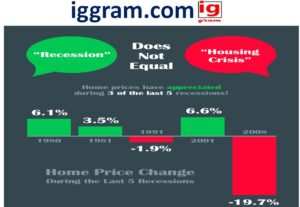
When individuals lose employment and purchasing power, people purchase fewer homes, and the prices of real estate will go down.
- Government Debt
Governments tend to spend more to help citizens and stabilize the economy when the economy is in recession and this may result in the government having a large national debt.
Signs of a Recession
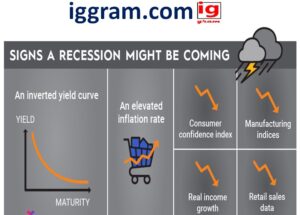
Not every time it is possible to notice the beginning of the recession, but there are some signs which can be used as warning signs. The following are the major symptoms of recession to watch out:
- Two or more quarters of decreased GDP.
- Rising unemployment rates
- A waning consumer confidence indexes.
- Decreased retail sales
- Stock market volatility
- Less production in manufacturing.
- Stricter credit or increased interest rates.

Preparing in the Event of a Recession.
Although nobody can avoid the impact of a recession, there are some things you can do to ensure the security of your finances and make sure you are ready:
- Build an Emergency Fund
Save at least 3-6 months of living costs to cover the necessities such as rent, groceries, and bills in case the income will not be stable.
- Reduce Debt
Debt is prone to high interest and thus acting like a heavy load during the downturns. Use credit cards and loans to cover debts as much as you can.
- Diversify Your Income
Think about working part-time, becoming a freelancer or doing side hustles. The multiple sources of income minimize the risk in case your primary job gets hit.
- Focus on Essential Spending
Reduce unnecessary expenditures. Develop a budget, which focuses on saving, housing and necessities.
- Invest Wisely
When investing, look at long-term and stable investments such as index funds, bonds or dividend stocks.
- Upskill or Reskill
With recessions, competition in the job markets rises. Being able to learn new skills or certifications can make you employable.
Past Incidences of Recession.
- The Great Depression (1929–1939)
History was plunged into the worst economic decline in its history due to stock market crash, bank failures and fall in global trade.
- The Great Recession (2008–2009)
This was a recession that caused millions of people to lose jobs around the globe triggered by the United States housing sector meltdown and banking crisis.
- The COVID-19 Recession (2020)
One of the quickest economic drops in recent times was forced by a global pandemic that stopped traveling, manufacturing, and services.
Conclusion: Recessions are short lived but can be controlled.
Knowledge on what recession is does much to eliminate fear and confusion on recession. Recessions are not only painful, but also normal in the normal course of the economy.
Any recession has its day; it will turn into recovery as consumer confidence will come back, purchases will be made again, and business will begin to expand once again.
Being informed, spending your money in a smart way, and having a backup, you are able to survive any economic disaster and stand taller on the other side.
Also read- Exposed in simple 3 step What is inflation?