

Incredible Anaheim, California, an energetic city within the Orange County that is primarily recognized by Disneyland Resort, Anaheim Convention Center, Angel Stadium and the Honda Center.
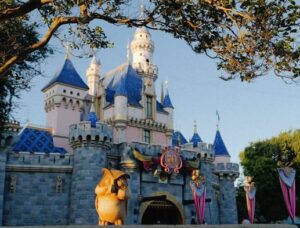

Anaheim is a popular tourist destination in the world, developed and founded by the German settlers, and with a booming economy and a wide range of population, including diverse cultures, Anaheim has developed into a global tourist attraction.
The city is a mixture of the past, culture, and contemporary and provides the visitor with the world class entertainment, family friendly activities, shopping, eating and recreation of the outdoors in places such as the Oak Canyon Nature Center.
The tourism, conventions and industry drive the economy of Anaheim, and the neighborhoods of the city offer a different blend of Southern California lifestyle. Nevertheless, in spite of the housing affordability and urban expansion, Anaheim still has some developmental projects that include DisneylandForward that are determining its future.
Anaheim offers the best way to have fun, open a business, or even move about with excitement, opportunity, and a rich cultural experience in the mid-southern part of California.


Overview & Geography
- Anaheim is a city located in the Southern California, Orange County. It is about 25 miles (≈ 40 km) southeast of Los Angeles.
- The city is located on the Santa Ana River plain.
- Total area: approximately 50.9 square miles (131.8 km 2) of which nearly none is water. Height is approximately 157 ft (48 m) above the sea level.
History
- Anaheim was established by German immigrants in the year 1857. It had been initially included in a Mexican land grant ( Rancho San Juan Cajon de Santa Ana ).
- Its name is a blend of Ana, the river Santa Ana, and Heinrich which is a word of German origin meaning home.
- Early economic activities: vineyards to wine, agriculture (citrus, walnuts etc.). Disease in the grape vineyards with time and urbanization saw agriculture yield to residential, industrial and commercial development.
- One of the biggest developments was the establishment of Disneyland in 1955 that made Anaheim one of the biggest tourist cities.


Demographics
- Population (2020 census): ~346,824 people.
- Divided income: median household income: approximately, $101,145/per year.
- Education: 31.8 percent of population has a bachelor degree and above.
Government & Infrastructure
- The form of government: council-manager.
- Mayor: Ashleigh Aitken.
- Key venues comprise Anaheim Convention Center, which is among the largest exhibition centers in the west coast of USA.
Economy
- Tourism is a significant economic factor in Anaheim or, to be more specific, Disneyland Resort is the largest single employer.
- Other contributing factors include the Convention Center, numerous hotels, restaurants and Stores in the Resort District.
- Industrial/manufacturing also: Anaheim Canyon is the principal industrial/business park of Anaheim, and it constitutes a significant portion of the industrial space of Anaheim.
Attractions & Culture
- Disneyland Resort – this is what Anaheim is probably known best.
- Angel Stadium of Anaheim: the Los Angeles Angels of Major League Baseball.
- Honda Center sport and concert arena.
- Anaheim Convention Center: arena, conventions, and expos.
- Outdoor and natural locations: e.g. Oak Canyon Nature Center 500 ft trails, nature preserve.
- Historic buildings: one of the distinctive buildings is the Samuel Kraemer Building.
Climate
- Anaheim has a climate characteristic of Southern California: warm and dry summers and mild and moderately wet winters.
- Rain is primarily experienced in winter; it is basically non-snowy.
Recent and Current Developments.
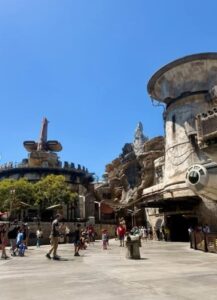
- DisneylandForward: One of the biggest plans that Anaheim has approved to expand and modernize Disneyland Resort with new attractions, stores, entertainment, and without adding the size of the same. Billions of investments estimated in the coming decade.
- The affordability of housing is a major issue Housing costs have increased, wages in most industries have been slow. There have been reports that Anaheim will not reach the same level of housing affordability as at pre-pandemic levels.

Challenges & Issues
- Affordability of housing is challenging to several residents. The cost of living in the Southern California is high, and Anaheim is not an exception.
- Effects of tourism: overcrowding, infrastructure pressures, environmental (traffic, pollution, etc.) effects. Big expansions such as that of Disneyland are subjected to an environmental review.
- Balanced growth: although large employers and tourism are the main sources of economic activity, it is important to make sure that local communities enjoy the growth (in terms of jobs, housing, services, etc.).
Conclusion
Anaheim, California is much more than Disneyland, it is a city that is founded on a deep historical background, is diverse and has a growing population and can be supported by a strong economy built on tourism, entertainment and industry.
Anaheim was established by the German settlers in the mid-19 th century, and since that time it has transformed to a busy metropolis with a global reputation. Its attractions like Disneyland Resort, Angel stadium, the Honda center and Anaheim Convention center have made it one of the destinations that are mostly visited in Southern California.
Other than the tourism business, Anaheim provides its residents with a combination of cultural heritage, job market, as well as community facilities. Simultaneously, the city is experiencing the issues of housing affordability, infrastructural needs, and a dilemma between fast development and living standards of residents.
As it works on its projects, such as the DisneylandForward, Anaheim is set to continue being a bustling center of innovation, entertainment, and economic development. To tourists, it is a global-rated holiday spot; to locals, it is a multifaceted but vibrant neighborhood to live in.
Also read- Stunning New Orleans, Louisiana since 1718