

Magical Los Angeles Chargers since 1960, how they started in AFL in 1960, to the present in Los Angeles. Read about iconic games, legendary players, and franchise achievements in this in-depth guide.
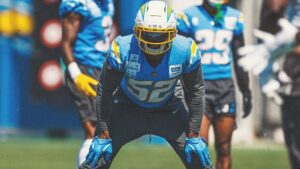

- Origins and AFL Era (1960–1969)
- Founded: 1960
- Original Location: Los Angeles, California.
- American Football League (AFL): original League.
- Founding Owner: Barron Hilton (son of Hilton Hotel fortune)
- First Head Coach: Sid Gillman
Key Events:
- Their inaugural season was in Los Angeles in 1960 but in 1961, the Chargers relocated to San Diego in search of a bigger fan base.
- Sid Gillman was a radical coach, a vertical passing game, and this aspect had an impact on the modern day football tactics.
- During the AFL time, the Chargers were also competitive and won the AFL Championship in 1963, beating the Boston Patriots 51-10.
- Famous crimes with high scoring and came up with stars such as Lance Alworth who is a Hall of Fame wide receiver colloquially known as Bambi.
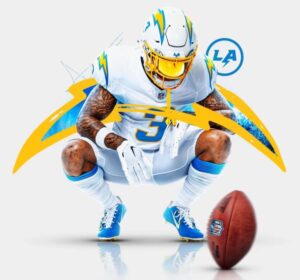

- San Diego Chargers Era (1961–2016)
Early Years:
- In 1961, transferred to San Diego, where they played at Balboa Stadium until 1967, after which it was transferred to San Diego Stadium (and later Qualcomm Stadium).
- These secured division titles in the AFL in the 1960s and were regular playoff participants.
NFL Merger Era:
- In 1970 the AFL was incorporated into the NFL; the Chargers became members of the AFC West.
- Had a hard time in the 1970s, occasional playoffs.
1980s Highlights:
- the face of the franchise: quarterback 1973-1987, Dan Fouts.
- Under the Air Coryell offense of Don Coryell, it had dominant passing formations that featured such players as Kellen Winslow.
- Won AFC West titles in 1979, 1980, 1981, 1982, and 1986.
- In 1981, it made it to the AFC championship where it lost to Cincinnati Bengals.
1990s–2000s Struggles:
- Teams were not very successful and participated in playoffs once in a while.
- Legendary players like Junior Seau were also in attendance.
- There were frequent changes of head coaches, and very few successes.
Norv Turner Era:
- Norv Turner coached (2007-2012), favoring good offense.
- Philip Rivers became a franchise quarterback and the team has never won a Super Bowl but made several appearances in the playoffs.
2000s Key Players:
- LaDainian Tomlinson, a hall of fame running back, made NFL records in single-season in 2006.
- The Chargers had a reputation of explosive offenses but they had not done well in the playoffs.
- Move to Los Angeles (2017-Present).
Move Back to Los Angeles:
- And, the Chargers moved to Los Angeles in 2017 after failing in negotiations to relocate to San Diego, sharing SoFi Stadium with the Rams since 2020.
- The relocation proved to be a controversial one, which is why most fans in San Diego were disappointed.
Los Angeles Era:
- First head coach in Los Angeles was Anthony Lynn.
- In 2020, the new franchise quarterback was Justin Herbert who was drafted and early on in his first year, he broke the rookie passing records.
- The team itself is looking forward to the re-establishment of itself as a regular play-off participant in the new era of the NFL.
- Notable Achievements
- AFL Championships: 1 (1963)
- AFC West Championships: Several, the last one being in 2009.
- Hall of Famers: Lance Alworth, Dan Fouts, Kellen Winslow, LaDainian Tomlinson and Junior Seau.
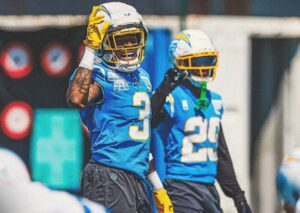

- Franchise Identity and Culture.
- Colors: Powder Blue, Gold, White (classic)
- Nicknames: Bolts (logo is a lightning bolt)
- Traditionally high-powered passing offenses, since the days of Air Coryell up to Justin Herbert.
- Fan base not based in San Diego but an attempt to establish there in Los Angeles where they have to compete with Rams and other sports teams of Los Angeles.
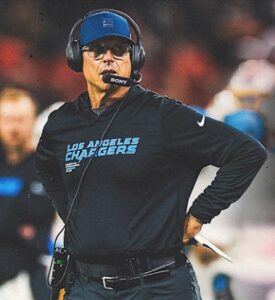

Conclusion
The Los Angeles Chargers have an exciting story of perseverance, flexibility, and football creativity, which traces back to the AFL era of their formation more than sixty years ago, and the current times in NFL history. The Chargers were founded in 1960 by Barron Hilton in Los Angeles and they soon became a competitive team in the newly formed American football league.
The team, coached by revolutionary coach, Sid Gillman unveiled a revolutionary game of vertical passing and formed a base to offensive formations which have been passed on to generations in professional football. Early stars such as Lance “Bambi” Alworth did not only introduce accolade individualism but also contributed to building the image of a franchise whose games were characterized by high scores and electric play. The AFL successful run in the 1963 championship consolidated the early legacy of the Chargers.
When the team relocated to San Diego in 1961, it was a new chapter as the franchise was able to establish a strong fan base and establish itself in an expanding sports market. The Chargers have gone through both dominance and the struggle stages during the AFL and the post-merger NFL periods. The 1980s, which was characterized by the Air Coryell crime and quarterback Dan Fouts, enjoyed exciting games and AFC West wins though they failed to get to the Super Bowl.
Such iconic players as Kellen Winslow only enhanced the image of the team as being the dynamic pass based team, and other legends like Junior Seau and LaDainian Tomlinson only served to further consolidate the image of the spectacular individual performances in the later decades. Although the Chargers boasted of intermittent playoff performance, they were associated with creativity, blistering offense and inexorable aim at perfection.
In 2017, the transition towards relocating back to Los Angeles introduced a contentious yet a revolutionary period. The team was in a position to share SoFi Stadium with the Rams, and here it had a challenge of reconnecting with the fans in an over-saturated sports environment and retaining its competitive advantage.
The arrival of quarterback Justin Herbert who made a splash on the rookie passing records, is an indicator of a bright future of the franchise. This identity, deeply rooted in the team colors of powder blue and gold, the lightning bolt logo, and the focus on high-powered passing, has stayed the same even at the time of relocation and change in team dynamics.
The story of the Chargers dates back to the AFL Championship glory, the struggle to remain, the ability to adjust, and the values of becoming great in football. The franchise has been characterized by legendary games, innovative coaches, and a culture of aggressive offense, which have given the franchise its legacy in both San Diego and Los Angeles.
The Chargers are heading into a rich history and a dream of reaching new heights in the decades ahead as they still overcome the obstacles of an exciting NFL atmosphere. Their past does not just put a mark on their previous success but it also gave them a future basis of success as well and fans and players are ready to adapt to the electric energy that is the hallmark of this legendary team.
Also read- Extraordinary Kansas City Chiefs since 1960