
The U.S. immigration officials Raid at Hyundai plant in Georgia, 475 arrest. Workers at a Hyundai EV battery factory facility in Georgia valued at 7.6 billion U.S. dollars, led to diplomatic tension between the US and South Korea, the legal investigation of the subcontractors, and resurrected the debate on immigration enforcement.
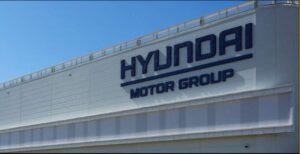
What Happened
- The United States government conducted what was said to be the largest scale single site immigration raid in United States Department of Homeland Security history in September 2025, where around 475 people were arrested at a Hyundai-LG Energy battery construction plant in Savannah, Georgia.
- Most of the arrested persons were South Korean nationals, and most were found to be holding expired visas, had come through the visa-waiver programmes, which do not permit employment in the country, or had crossed the border unlawfully as one official of homeland security investigations stated.
- None of the arrested had been directly employed by Hyundai or LG Energy Solution, both companies stated, blaming subcontractors and affiliated labor networks instead.

Broader Context & Response
- The facility is one of the batteries located within a $7.6 billion EV battery project, which is viewed as the largest economic development investment in Georgia history.
- Building has been halted, and Hyundai declared internal investigations and physical control of its employment procedures, in particular, its subcontractors.
- The South Korean government has shown a lot of concern and has sent diplomatic officials in order to help arrested citizens. A special response force has been established and the President of South Korea has pledged full support to detainees.
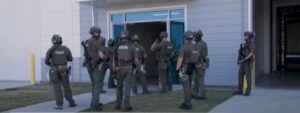
A brief sketch, with sources, on (1) previous, related U.S. worksite raids, the (2) key legal questions and probable legal courses, and (3) what South Korea is currently doing.
1) related precedent cases — brief history.
- Postville, Iowa (Agriprocessors), May 2008 – commonly used as the standard other largest single-site raid before this one: some 389 workers were arrested; the local economic and social impact was enormous.
- Swift: 2006 Swift/Operation Wagon Train – well-coordinated raids at several Swift meatpacking plants (six states) in Dec 2006; also an earlier instance of multi-location enforcement beginning with whole plants.
- Longer trend: ICE/worksite enforcement has increased since 2003; more high swinging operations have taken place in the mid-2000s and since; scientists and interest groups have documented these boom and bust cycles of large work persecutions and the controversies that they provoke.
2) legal commentary: who? and what?
- Liability of employer / contractor.
- The Immigration laws:The Immigration Reform and Control Act (IRCA) is an Act that governs employers in the United States to audit work authorization (Form I-9). In severe cases, disobedience can result in administration penalties, civil penalties, and criminal penalties. Subcontractors also hold general contractors accountable in cases that they know they are employing illegal workers or companies that fail to check on the subcontractors.
- Subcontractor risk: Large construction projects often depend upon levels of subcontractors. Enforcement is frequently directed at the company in which the workers were actually employed (subcontractor), although general contractors as well as prime employers may be exposed, in particular, when DHS discovers that the prime knew or should have known of illegal hiring practices. Contractors are oriented, on legal issues, on audit, on the I-9 issue, on strict screening of vendors and records.
- Criminal vs civil exposure
- Employees: usually dealt with administratively (immigration process) and could be charged with criminal offenses when they came into the country because they trafficked drugs/faked documents etc. Many of the cases involve civil immigration offences (illegal employment, overstay).
- Civil penalty and debarment / contract penalty: It is also more prone to pursue criminal penalties which are uncommon but may be more popular in cases in which it is evident that there has been a conspiracy, fraud by harboring and/or forging document. Legal defense and exposure is fact-dependent (was there I-9 documentation? Was it done with forged documents?).
- What prisoners and their families can (and should) do.
- Consular access is a possibility. According to the Vienna Convention and the U.S. policy foreign nationals must be made aware of the right to notify their consulate and consular officers have the right to access/assist their nationals; ICE has their own policies regarding consular notification. This means that the South Korean consular officers can access the detainees and provide some assistance (list of lawyers, monitor their treatment, help with family notification).
- Basic: The immigration process: detained persons are generally put into a removal (deportation) process; potential outcomes are bond hearings (release on bond), relief from removal (when applicable), or deportation. There are litigation mechanisms (bond motions, appeals to the immigration courts/BIA); legal assistance is offered by various organizations dedicated to detained cases.
- Right and action: detainees are entitled to consular notice and to consult and receive due process in an immigration court. The families are encouraged to seek immigration attorneys that are well informed on the detained docket and contact the detainees consulate immediately.
- Short-term legal ramifications (under case law) are likely to be this.
- Many of the detainees will proceed individually through removal; there will be a number released on bond; a few will be granted relief; a number will be deported. Employers are subject to audit, fines, suspension of contracts, and civil penalties; less frequent but not nonexistent criminal prosecutions of employers. Massive raids throughout history led to a mixture of deportations, prosecution of document fraud, and later civil actions to overturn the process and consequences.
3) What we know now is the continuing response by South Korea.
- Diplomatic action: The South Korean government has publicly shown great concern and capacity to establish a special response team; officials have indicated that they will provide assistance to detained nationals and may deploy diplomats to the U.S. to gain access to consular personnel and raise the matter at diplomatic levels. South Korean leaders have encouraged protection of citizens and investors.
- Numbers & logistics: It is reported that hundreds were detained (out of about 475 total detained; Korean media estimated about 300 of those detained were South Korean citizens). The detainees are being sent to ICE detention centers (it seems, Folkston, GA), and the logistics of consulter visits and access to attorneys instantly becomes a priority issue.
- Political/diplomatic interests: The Seoul reaction is also being seen against greater economic aspects between U.S-Korea and high Korean investment in U.S, therefore the two issues of protecting the people and the relation between the two countries. Government pronouncements in South Korea focus on consular support as well as concern regarding investor protections.
Summary
To sum it up:
- When: Early September, 2025 (about Sept 4 to 5)
- Where: EV battery plant construction site around Savannah, Georgia.
- What: This is the biggest-ever single-site DHS immigration enforcement operation.
- Who: 475 or more were arrested, by far mostly Americans of South Korean descent; no direct Hyundai or LG employees.
- Responses: Diplomatic crisis, halted building, corporate investigation, widely attacked by lobby groups.

Conclusion
Attention has been drawn to the immigration raid on an EV battery plant in Georgia owned by Hyundai as economic ambition, immigration enforcement, and international relations collided.
The case sheds light on the vulnerability of this thorny web of subcontracting and raises awareness of the loopholes in compliance law where nearly 475 workers end up in jail, most of whom are South Korean citizens.
Though Hyundai and LG still maintain that no arrested is directly their employees, the backlash has already brought a 7.6 billion-dollar project to a standstill, aggravating relations between the U.S. and South Korea and rekindling debate on the problem of workplace raids.
Although this case is currently being tried in court, this will not only have a direct impact on the lives of the detainees and subcontractors, but also on enforcing foreign investment and labor legislation in the soaring EV industries within America.
Also read- Electric Era announced to launched new charging network

