

Learn the story behind the Real Madrid FC, the legends of the Spanish football club, how they conquered Europe, its pluses, minuses and their unforgettable history.

Real Madrid (Spain)
Foundation and Early Years (1902–1940s)
– Established on 6 March 1902 and known as Madrid Football club by some volunteer footballers.
- In 1920 King Alfonso XIII granted it its Real (Royal) status.
It was soon followed by the club becoming one of the most envied clubs in Spain, as it won several Campeonato Regional Centro championships.
By the late 1930s-40s, in between stops and pauses by the Spanish civil war, Madrid was still competitive domestically.
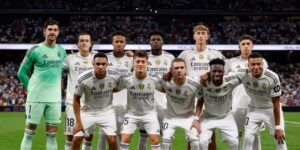

Golden Age under Santiago Bernabéu (1950s–1970s)
In 1943, Santiago Bernabes joined the club and made Real Madrid a world-power.
- Constructed Santiago Bernabéu stadium and created a strong school of youth (La Fábrica).
- Europe was in the hands of the club as they won the first 5 European cups (1956-1960) with a legendary team including Alfredo Di Stéfano, Ferenc Puskás, Francisco Gento.
- Developed a reputation as the Kings of Europe.
Domestic Rivalries and Growth (1980s–1990s)
- Instead it intensified fierce rivalry with FC Barcelona (El Clasico).
The La Quinta del Buitre (Butragueño, Sanchis, Michel, Marton Vazquez, Pardeza) became the domineering generation in Spain.
- Won five consecutive La Liga titles (1986–1990).
- Madrid has not been on top in the 1990s, but it won the 1998 Champions League which had broken a 32-year lack of titles.
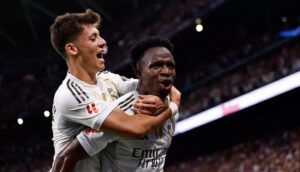

The Galácticos Era (2000s)
At that time there was the policy of the Galacticos initiated by the club president Florentino Perez where they signed stars such as Zidane, Figo, Ronaldo and Beckham.
- Real Madrid was transformed into the most fashionable and marketable club of the world.
- Henried success, along with inconsistencies due to absence of a balance between super stars and team organisation.
Won 2002 united cup long ball champions (Zidane and his popular volley) and multiple leagues.
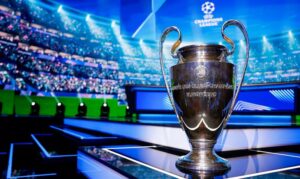

Modern Dominance (2010s–Present)
Madrid resumed its European superiority under such managers as Jose Mourinho, Carlo Ancelotti, Zinedine Zidane.
Won La Décima (10th Champions League) in 2014, after 12 years.
- Zidane helped Madrid to become the winner of three successive Champs league (2016, 2017, 2018).
They have now secured 14th champions league victories in 2022 and have strengthened their title as the most successful club across Europe.
- Continues as one of the world’s richest and most influential football clubs.
Strengths of Real Madrid
- European Legacy – Record 14 UEFA Champions League titles; strongest European pedigree.
- Monetary resources – The club is among the most affluent clubs in the world and has the resources to acquire the best of talent.
- Global Brand – Huge global fanbase, no one can match Barcelona and Manchester United in its popularity.
- Youth Development- La fabrica academy has trained gladiars such as Raul, Casillas, and Carvajal.
- Big Game Mentality – Famed by comebacks and performing well under pressure, particularly in the champions league.
- Stadium & Infrastructure- Santiago Bernabue, the crowd-favourite football stadium will be modernised into a futuristic sports venue.
- Acquiring Stars-Traditional practice of acquiring the best players in the world (Di Stéfano, Zidane, Cristiano Ronaldo).
Weaknesses of Real Madrid
- Reliance on Star Power – Success tended to be associated with superstar periods (Di Stéfano, Cristiano Ronaldo). Without them, performance sometimes dips.
- Managerial instability – high expectations means that there are frequent changes in the managers.
- Aging Squad Problems – Sometimes suck to replace the old guard with the young one (ex: post 2018 Ronaldo).
- Political Pressure – The team may be destabilized by president elections, politics in the club, and by the press.
- La Liga Competition – Barcelona and Atlético Madrid, although successful, have threatened their markets at home.
- History of Oversight Galacticos Era – There are excess stars which are not balanced in terms of tactics, thus creating inconsistency in them.
In summary:
The greatest and most successful club in European football history, with its winning spirit, financial strength and international profile, is Real Madrid. It has status, major event stability, and talent attraction as its biggest assets. Its weaknesses are that it depends on star players overly, is political within the company and unsustainable at times.
Also read- Lee corso coaching career