

Robotics started as very old-fashioned automata and mechanical devices that were driven by gears, water, and steam. The Robot development became programmable machines and industrial arms with the Industrial Revolution and innovations in the 20th century.
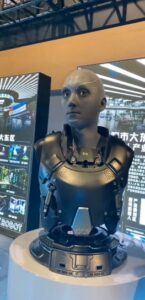

Ancient & Early Concepts
Ancient Greece (c. 400 BCE) The concept of mechanical beings is found in mythology, including Talos, a very large bronze sentry constructed by Hephaestus, god of invention.
3rd Century BCE (Alexandria, Egypt) Ctesibius and Hero of Alexandria invented first automata (self-operating machines), such as water clocks, mechanical birds and moving statues driven by air, water or gears.
English, also known as Islamic Golden Age 9th Century inventors such as Al-Jazari (11361206) created elaborate automata, including a humanoid service robot with a programmable programmable logic controller.
Renaissance & Early Modern Era
- 15 th Century: Leonardo da Vinci is going to sketch a mechanical knight (c. 1495), able to sit, stand, and move the arms and jaw.
- 18 th Century – In Europe, inventors designed elaborately designed clockwork automatas (mechanical dolls, writing machines and musical figures). Well known examples are The Digesting Duck by Jacques de Vaucanson (1739).


Industrial Age (18th–19th Century)
- The Industrial Revolution (17501850) brought machines and automation to the factories and were driven by steam.
Case: The industry began to combine with the idea of mechanical workers, but robots in the modernist meaning were not around yet.
20th Century- The Birth of the Modern Robots.
- 1921 The term robot was first used in a play by the Czech writer Karel Capek called R.U.R. (Rossums Universal Robots), in this case the Czech word robota (forced labor).
- 1930s-40s- Early humanoid robots such as Elektro (1939 Worlds Fair) before astonished the audience through speech and motion.
- 1940s – The concept of intelligent robots disseminated in science fiction, most notably by Isaac Asimov, who proposed the well-known Three Laws of Robotics.
- 1954 George Devol created the first industrial robot, Unimate, that General Motors used in 1961 to automate the factory.
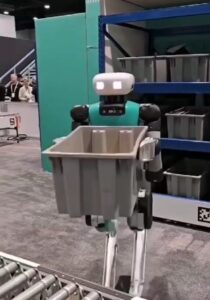

Late 20th Century – Rise of Robotics
1960s-70s 1960s-70s Robotics spread to industry, space exploration and medicine. Robotic arms were used by NASA in space missions.
The 1980s90s – robots began to find their way into the home in simple ways (toys, robot pets) and industries created complex machines to work in the manufacturing, surgery and exploration industries.
First AI-Driven Robots (1960s–1970s)
- 1961 Unimate: The first robot arm (although not AI) used industrially, fully automated.
- 1966 – Shakey the Robot (Stanford Research Institute):
o The world’s first AI robot.
o Was able to perceive surroundings, plan and move according to logical reasoning.
- 1972 – WABOT-1 (Japan): The first full-scale humanoid robot with vision, speech, and limb control.
AI Meets Robotics (1980s–1990s)
- The research of AI enhanced the perception and decision-making of robots.
- 1980s -Expert systems were introduced, with the assistance of these systems robots were able to do very specific jobs (e.g., diagnosing, troubleshooting).
- 1986 Honda began humanoid robotics program – later became ASIMO.
- 1997 IBM Deep Blue, a prototype, beat world chess champion, Garry Kasparov, showing the potential of AI (but not yet in robot form).
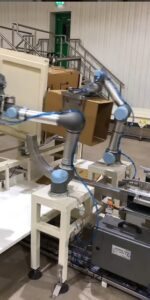

21st Century – Advanced Robotics & AI
Such humanoid robots as ASIMO (Honda, 2000) were able to walk and climb stairs, as well as communicate.
- Military & space robotics – Drones, Mars rovers (Spirit, Opportunity, Curiosity, Perseverance).
- Service robots – Vacuum robots (Roomba, 2002), robotic assistants, surgical robots (Da Vinci System).
- AI Integration A robots powered on AI, computer vision, and natural language processing were able to learn, adapt, and communicate better with people.
Humanoid AI – The combination of robotics and the world of artificial intelligence is embodied in humanoid robots, such as Sophia (Hanson Robotics, 2016) and the Tesla Optimus prototype (2021).
Modern AI Robots (2020s–Now)
- Social & Companion Robots – Pepper, Jibo, and ElliQ help with elderly care and social interaction.
- Medical Robots – AI-powered surgery assistants (Da Vinci System), hospital delivery robots, and rehabilitation machines.
- Tesla Optimus (2021) – The humanoid AI robot concept created by Elon Musk that could replace human labor that is dangerous.
ChatGPT-powered Robots (2022+) Humanoids with large language models (LLMs) to converse in a natural manner.
- Space Robots – AI-driven rovers (Perseverance on Mars), humanoid astronauts like CIMON (ISS).
Today & Future
Robots can be found in factories, hospitals, residential, military, agriculture, and space exploration.
- The future of robotics is moving in the direction of autonomous system, human-robot partnership and even the advent of AI-powered humanoids that could help in everyday life, risky tasks and even in companionship.
In short:
- 1950s-70s→ First AI ideas and Shakey (first AI robot).
- 1980s–90s → Smarter humanoids and expert systems.
- 2000s–2010s → Household AI robots (ASIMO, Roomba, Sophia).
- 2020s-AI/robotics converge with humanoids (Optimus, Boston Dynamics, bots powered by ChatGPT).
Conclusion
The history of the AI robots is indicative of how human imagination, science and technology have converged over centuries to make machines more intelligent and life-like. Since the mythical automata of the ancient world, such as Shakey, which was the first AI robot, in the 1960s, and modern humanoids such as Sophia and the Optimus of Tesla, robots have developed beyond being simple mechanical devices into intelligent systems capable of learning, reasoning, and interaction with people.
Nowadays AI robots are not only factory workers but also friends, nurse aides, explorers, and even collaborators of the imagination. As the powerful AI models, natural language processing and better sensors grow, the boundaries between the human and the machine become even more blurred.
The future looks bright as we have AI robots which are not only autonomous but also emphatic, cooperative and vital in the resolution of global problems whether in healthcare, space exploration or in the daily human living.
Also visit-https://iggram.com/