
Stunning Smithsonian Museums (Washington, D.C.) 4u – the National Air and Space Museum to the National Museum of American History. No entry fee, legendary display and cultural artifacts all welcome people of all age. Here’s a detailed overview:

Introduction to the Smithsonian Institution.
- Founding: In 1846, with money left by the English scientist James Smithson.
- Mission: The spread and sharing of knowledge.
- Organization: It consists of 21 museums and the National Zoo, and many research centers.
- Admission: Most of the locations are free of charge.
Washington, D.C. Major Smithsonian Museums.
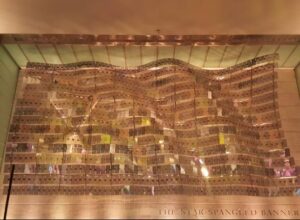
- National Museum of American History.
- U.S. history, U.S. culture, and U.S. innovation.
- Highlights:
o The national flag (flag that inspired the national anthem)
o Inaugural Gowns of the First Ladies.
o The lightbulb and the typewriter, American inventions.
o Cultural artifacts such as pop culture memorabilias, transportation, and toys.
- National Air and Space Museum.
- Specialisation: Aviation and space exploration.
- Highlights:
o Wright Brothers’ 1903 Flyer
o Spirit of St. Louis
o Apollo 11 Command Module Columbia.
o Mars rovers and lunar rocks
- Larger aircraft such as the Space Shuttle Discovery and the Concorde are also found in additional: Steven F. Udvar-Hazy Center in Virginia.
- National Museum of Natural History is arrayed with well-preserved examples showcasing historic •Artifacts: National Museum of Natural History is stocked with many historic artifacts.
- Abstract perspective: Natural sciences, biodiversity and anthropology.
- Highlights:
o Hope Diamond (45.52 carats)
o Fossils of dinosaurs, one of which is a Tyrannosaurus rex.
o Human evolution and cultural anthropology is manifested.
o Ocean Hall and Insect Zoo
- National Museum of African American History and Culture.
- Rapid eye movement: African American history, life, and culture.
- Highlights:
o Slavery and the Civil Rights Movement artifacts.
o Music, sports and arts cultural exhibitions.
o The historical artifacts such as the hymnal of Harriet Tubman.
- National Museum of the American Indian.
- Target market: Native American history, culture, and heritage.
- Highlights:
o Old artifacts, clothes, and equipment.
o Cultural shows and art exhibitions.
o Native American contribution educational programs.
- National Portrait Gallery
- gray: Portraits of great Americans.
- Highlights:
o Politicians, influential people, and presidents.
o Historical and modern literature.
o Member of the Arts network of the Smithsonian.
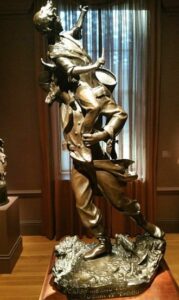
- Smithsonian American Art Museum/Renwick Gallery.
- Thematic: American art colonial to contemporary.
- Highlights:
o Paintings and sculptures and ornaments.
o Renwick Gallery is specialized in decorative arts and craft.
- National zoo (Smithsonian the national Zoological park)
- Niche Wildlife conservation and education about animals.
- Highlights:
o Giant Pandas
o Big cats, reptiles, elephants and marine animals.
o Endangered species research and breeding.
Smithsonian Other Locations of Interest.
- Hirshhorn Museum and Sculpture Garden: Modern and contemporary art.
- Freer Gallery of Art and Arthur M. Sackler Gallery: Asian art collections.
- National postal museum: History of stamps and the U.S. postal service.
- Anacostia Community Museum: Community museum in the city and locality.
Visitor Information
- Location: The majority of them are located along the National Mall, some such as the Udvar-Hazy Center are located in Virginia.
- Hours: Tends to be 10 AM -5.30 PM, but it depends on each museum separately.
- Entry Free: although some museums ( e.g. National Museum of African American History and Culture) may demand timed-entry passes.
- Tours: Educational tours and guided tours.
- Accessibility: The availability of sensory-friendly material and wheelchair-wise accessible.
Interesting Facts
- There are in excess of 154 million artifacts under the possession of the Smithsonian, both natural and cultural.
- The Smithsonian Folklife Festival is an annual festival on the National Mall that is used to celebrate the world cultures.
- Smithsonian scientists make research all over the world within such areas as anthropology, astrophysics and conservation.
Conclusion
The Smithsonian Institution in Washington, D.C. is not only a complex of museums, but it is also an international center of knowledge, culture and exploration. Whether it is the majesty of the exhibits in the National Museum of American History or the state of the art exhibits featured in the National Air and Space Museum, the Smithsonian has something to offer the interest of all.
Tourists get to learn about the rich history of the American people and the world, be awed by the masterpieces of art, learn about different cultures across the globe and available scientific inventions. The free entrance to most museums, educational opportunities, and interesting exhibits make the Smithsonian a place where all people can and will learn and where education is exciting and enjoyable.
Whether a history person, an art lover, science or a traveling family, the Smithsonian Museums offer a memorable experience that enlightens, entertains and relates the visitors to the history of man and nature.
Simply put, the Smithsonian is not merely a sightseeing place, it is an experience in time traveling the history, present and future of human accomplishments.


2 thoughts on “Stunning Smithsonian Museums (Washington, D.C.) 4u”