
Know what does a cavity look like in each phase, both white spots at an early stage and black holes at a later one. Get to know the symptoms, reasons.
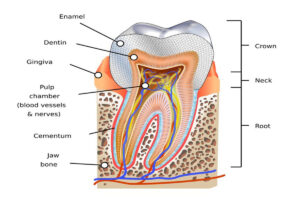
What Is a Cavity?
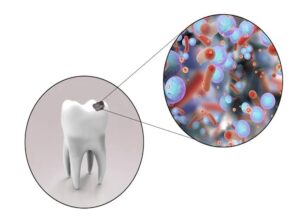
Cavity is a tiny hole or a tooth damage that has been caused by bacteria, the formation of plaque, and the erosion of acid. Cavities begin small, and in most cases, not visible, as they deepen with time.
Cavities usually form in:
- The molar surfaces of chewing.
- Between teeth
- Along the gumline
- Around old fillings
Knowing the appearance of cavities at the early and late stages is able to identify larger dental problems.
What Does a Cavity Look Like? (Visual Breakdown)
The change of appearance of cavities develops. A step-by-step examination of how things could appear in the mirror is provided below.
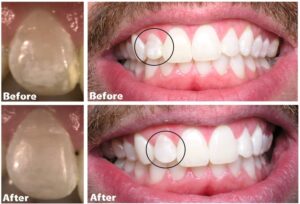
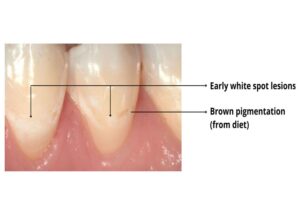
- Topography At initial stages of lesion: White Spots (Initial Demineralization)
Appearance:
Typologies
- Chalky white spots or patches.
- Minor discoloration of the enamel.
- Slight dullness relative to the tooth of surrounding.
- Mostly hard to see in the absence of bright light.
At this stage the cavity is developing underneath the surface. There is no hole there yet but the enamel is getting weak.
Good news: This step is also reversible using fluoride, brushing and diet modification.
- Early Cavity: Light to Dark Answers.
Appearance:
- Light brown spots
- Grey or dark discoloration
- Small tooth surface marks which are visible.
Such places can be regarded as an innocent spot, though in most cases, it means that the enamel has been destroyed.
Common areas:
- Molars (chewing surfaces)
- Between teeth (they can only be seen with dental equipment or the X-rays).
In case you notice this, then you need to visit a dentist.
- Observable Pit: Brown or Black hole.
At this point, the cavity is well exposed.
Appearance:
- A small or medium-sized hole
- Appearance Brown, black, or dark grey.
- Rough or jagged edges
- May trap food easily
This is the most familiar appearance of the cavity. When a hole is made it could not be cured naturally and must be filled.
- Advanced Cavity Dark Hollow or Deep Pit.
Appearance:
- Larger hole or opening
- Deep hollow, deep brown hollow.
- Occasionally has the form of a crater.
- Sensitivity As Really tastes sweets or chews painfully.
This step implies that the decay has gone into dentin deep layers.
Symptoms may include:
- Sharp pain
- Lingering sensitivity
- Bad breath
- Food getting stuck
- Severe Periodontitis: Abscess or Infection.
When not taken care of, the cavity may extend to the tooth pulp (nerve).
Appearance:
- Large hole
- Dark, broken, or cracked tooth
- Swelling around the gums
- Possible pus or abscess
At this point, you may need:
- A root canal
- A dental crown
- Or teeth excision in extreme situations.
Where Cavities Where Often Fairy.
- On Molars (Chewing Surfaces)
Have a black or brown appearance like black or brown pits in the grooves.
- Between Teeth
Typically dark shadows or visible by means of X-rays.
- On Front Teeth
Look as white dots or as brown spots at the gum.
- Around Fillings
Black lines around old dentures.
Red Flags of Cavities You Can’t Afford to Ignore.
Although you have not possibly seen a hole until the moment, your tooth will present potential problems:
- Hot, cold or sweet sensitivity of food.
- Minimal and warm discomfort or pain during chewing.
- White or brown spots
- Bad breath which does not leave.
- Gums bleeding near one tooth
- The word depicts a place that is uneven and can be felt by tongue.
These signs can be identified early before you are subjected to extensive dental operations.
Checking at home Determining the presence of the cavities?
Although it is only a dentist who can diagnose the cavities, you can search:
Use a bright light
Flashlight or phone Feigning in front of the mirror.
Look for color changes
A decay can be determined by white, brown or black spots.
Closets Inspect jagged or greasy places.
Run your tongue over your teeth in order to feel abnormalities.
Watch for trapped food
In case food is lodged in between the same teeth, then a hole is likely to build up.
Check for sensitivity
With one particular tooth responding more, there is a possibility that there is decay.
The Dentists Method of detection of cavities.
Modern tools are used by dentists to determine the presence of cavities:
- X-rays of the teeth (most effective in detecting cavities within the tooth)
- Intraoral cameras
- Laser cavity detectors
- Visual and tactile exam
That is why even minor holes which are not seen at home are early spotted.
Is It possible to prevent the formation of the cavities?
Absolutely. The cavities can be avoided to a great extent with regular practices:
- Brush twice every day with dental toothpaste with fluoride in it.
- Floss in order to clean between the teeth.
- Eat less of sweet desserts and soft drinks.
- Have dental examinations twice a year.
- Drink water after meals
- Use fluoride mouthwash
These are just some simple measures that will save you a huge chance of developing cavities.
FAQs:
- What was a cavity like on account of being?
A tooth cavity at an early stage appears in the form of a white, chalky spot on the tooth. It might be insignificant yet it shows that the enamel is becoming weak.
- Do you notice a hole on the mirror?
Yes, bigger cavities may be visible and they look as brown spots or black spots or small holes. In the early cavities, it may not be possible to observe without dental equipment.
- What color is a cavity?
Cavities may appear:
- White (early stage)
- Light brown
- Dark brown
- Black
The dark color the more heavily it is decayed.
- And how could I tell whether I am really hollow or not?
Look for:
- Spots or discoloration
- Holes or pits
- Tooth sensitivity
- Pain when biting
X-rays can be established by a dentist.
- Do cavities smell?
Yes. Bad breath is formed as a result of bacteria and food caught up in the tooth by the cavities.
- Cavities dissipate because they abscond themselves?
No. When a hole develops, the cavities will not heal themselves. Early white-spots lesions are the only lesions that can be reversed.
- Is there any occurrence of a cavity to be found under filling?
Yes. Dental work can lose its seals resulting in cavities around or under the old dental work.
Final Thoughts
Knowing how it should appear: those early white spots, dark holes, and suchlike, can make you prevent tooth decay at its early stages before it gets serious. Dental checkups and oral cleanliness are your major ways of fighting cavities.
Also read- Simple 5-thing of mens mental health month

