
The 8.6 blackout demystified: what was the cause of the large scale power outage, the effects it had on everyday life, lessons learnt, and possibility of the same.
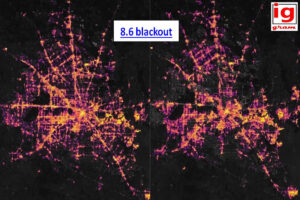
8.6 Blackout: What, Why and What Next.
It began as any ordinary day-lights on, phones charged and life running. Then all at once everything became dark.
The 8.6 power blackout was not just another power cut. It was a wake-up call.
In the regions that were hit, transport systems, homes, businesses, and hospitals were in a state of chaos in just a few minutes. And as power came back again, the questions still remained. What caused it? Could it happen again? And are we really prepared?
This paper divides the 8.6 blackout, the information we have so far and why it is more crucial than ever to listen.
What Is the 8.6 Blackout?
The 8.6 blackout is a mass-scale power failure that was caused by a magnitude 8.6 earthquake which caused a disruption of critical infrastructure. Although the strength of such earthquakes is uncommon, the effects of such earthquakes are huge particularly where they coincide with the ageing power grids and urban crowding.
As compared to short and localized failures, this outage:
- Various cities and areas were affected.
- Spent several hours in certain places.
- Impaired vital services such as water, communications and transportation.
Simply put, it was not only the ground that shook. The systems that we use on a daily basis did as well.
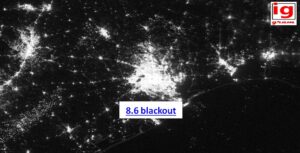
How a Massive Earthquake Can lead to a Huge Blackout.
All an earthquake needs to do to interrupt power is to strike a power plant directly. The 8.6 blackout can be discussed as a textbook example of how interconnected the modern infrastructure actually is.
The major causes of the outage.
- Damage on the transmission line by the movement of the ground.
- Uncontrolled shut down of grids to stop fire and failure of equipment.
- Structural stress-induced substation faults.
- Failure of communication between grid operators.
Power grids are self-protective. Instances of instability are quickly detected with sensors shutting down parts. Probably that safety provision helped avoid more serious harm but also left millions of people without power.
Short-term Effect on everyday Life.
The blackout was shocking to most of them.
Homes and communities
- Elevators stopped mid-floor
- Mobile and internet networks were made unreliable.
- Food spoiled in longer outages in a refrigeration chiller.
Emergency services and Hospitals.
Majority of hospitals were transferred to the use of backup generators in a matter of seconds. Not every facility was equally ready though. Smaller clinics have been delayed and the emergency responders had difficulty with offline traffic lights.
Businesses and the economy
Retailers closed early. Production in factories was halted. Online checkout systems were inaccessible, and most of the shops had to go in cash or even close down.
It remains to be calculated how much the 8.6 blackout may affect the economy, but the preliminary figures are in the billions.
Was the Power Grid Prepared?
It is the awkward question that is being posed by most experts.
The grids in most of the areas were constructed many decades ago. They were never intended to cope with:
- Extreme seismic events
- Rapid population growth
- The current grade of the electricity demand.
Weak points exposed
- Aging transformers
- Minimal overlap in channels of transmission.
- Slow restoration of specific areas.
Physical damage was not only revealed by the 8.6 blackout. It revealed planning gaps.
How Long Did Recovery Take?
Restoration was very uneven on a geographical basis.
- Some cities were back to normal within 2-4 hours.
- Suburban zones took 8–12 hours
- Outages of over one day occurred in remote regions.
The grid operators were subjected to the priority system:
- Emergency hospitals and facilities.
- Communication hubs and water treatment.
- Residential areas
- Business and manufacturing areas.
This acted out method saved lives- but it also made the point that the comfort of modernity is as slim as a wire.

The lessons learned as a result of the 8.6 blackout.
Each great blackout leaves something greater than blackness. It leaves information, experience and acquired lessons.
Key takeaways
- The issue of grid resilience is more than ever.
- Even homes should not do without backup power.
- The communication strategies in disasters should be enhanced.
- Another decade cannot pass before infrastructure upgrades are done.
To the people, the blackout was a wake-up call to many that they should have essential items like flashlights, power banks, batteries, and emergency supplies.
In the case of governments, it emphasized the need to modernize.
Is Another Blackout Like this possible?
Short answer: yes.
There is no way of preventing earthquakes. Nevertheless, their effects can be mitigated.
Without investment in:
- Substations that are earthquake resistant.
- More rapid isolation and recovery smart grids.
- Off grid power sources such as solar microgrids.
The danger of another large-scale blackout is extremely valid.
The reason is that the 8.6 blackout might be not the last. The next thing to be seen is whether it will become a turning point.
Rethinking Power Infrastructure in Countries.
Even in the wake, some areas have already been declared to be under review and upgrading.
Emerging solutions
- Increased fault detection with the help of smart grid technology.
- Cabling underground in high-risk areas.
- The independent microgrids during disasters.
- Storage energy systems that are renewable.
Such changes will not occur immediately. But it is obvious that the blackout has changed priorities.
Frequently Asked Questions
1.What caused the 8.6 blackout?
The failure of infrastructural facilities that were as a result of a magnitude 8.6 earthquake, which destroyed transmission lines and caused automatic grid shutoffs were the main cause of the blackout.
2.How many minutes did the blackout of 8.6 take?
Outage duration varied. Some regions came under power within hours whereas others had a power outage of more than 24 hours.
3.Did it cause permanent damage to the power grid?
The majority of damage could be fixed but the incident revealed the frailty of ageing grid infrastructure on a long-term basis.
4.Was it possible to have been better prepared?
Yes. It would have been possible to have stronger seismic design, grid redundancy and distributed power systems that would have played a great role in reducing the duration of outage.
5.Were blackouts depriving the hospitals of power?
Large hospitals used back-up generators and were not much impacted, but smaller ones had difficulties.
6.What can the households do to prepare against future blackouts?
It can pay to have emergency supplies, power banks, emergency lighting and a plan of basic preparedness.
Final Thoughts:
The 8.6 black out was not just a mere inconvenience. It was a stress test- and the outcome was equivocating.
Although the emergency responses were effective, the systems that supported the measures were old-fashioned. Resilience is no longer a choice as climate extremes and natural disasters are becoming increasingly more common. It’s essential.
The lights are back on. But the real work starts now.
Also read- Best 3 way switch wiring

