

Learn about the history of FC Barcelona (Spain), its golden years, its greatest strengths such as La Masia and tiki-taka football, and its greatest weaknesses such as financial problems and latest European drop.


History of FC Barcelona
- Founded: November 29, 1899, by a consortium of Swiss, English and Catalan footballers under the leadership of Joan Gamper.
- Identity: The identity is called Més que un club (More than a club), and it represents the culture, pride and independence of Catalonia.
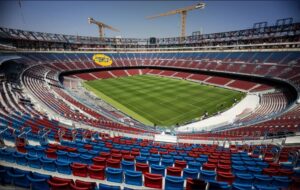
Stadium: Camp Nou (since 1957, Europe’s largest stadium, under renovation as part of the Espai Baraca project).
- Domestic Success:
o 27+ La Liga titles (as of 2025).
o 30 or more Copa del Rey trophies (record holder).
- European Success:
o 5 UEFA champions leagues (1992, 2006, 2009, 2011, 2015).
o Several UEFA Super Cups and FIFA Club world Cups.
- Golden Era:
o During the 4-year reign of Pep Guardiola (200812), Barcelona adopted the radical tiki-taka, spearheaded by Lionel Messi, Xavi and Iniesta, and won 14 trophies.
- Recent Years:
o After 2021 (the post-Messi era) has seen a period of rebuilding (with an emphasis on young players such as Pedri, Gavi, and Ansu Fati) and old players such as Lewandowski.
o Transfers and squad depth have been affected by financial struggles since 2020.

Strengths
- Philosophy & Style:
o Well-known possession-based tiki-taka football.
o Focus on fluid attacking and technical midfielders.
- La Masia Academy:
o It has one of the best youth systems in the world, and has brought legends in the form of Messi, Xavi, Iniesta, Busquets and Pique.
- Massive Fanbase:
o International following, particularly in Europe and Latin America and Asia.
o Catalan identity produces intensive local loyalty.
- Historic Players:
o The house of football heroes: Messi, Ronaldinho, Cruyff, Rivaldo, Eto, Puyol, etc.
- Resilient Brand:
o Barcelona has been struggling in finance and on the field but is still a leading sponsoring, broadcasting, and playing destination.

Weaknesses
- Financial Problems:
o COVID-induced debt crisis (more than 1B at the peak).
o Difficulty in signing new players because of the salary limit of the La Liga.
- Overreliance on Key Stars:
o Long-traditionally dependent on Messi (2005-2021).
o Messi transition revealed a weakness in terms of depth in the squad.
- Defensive Vulnerabilities:
o Attack and midfield have been in good shape, but defense has been accused of many lapses especially in Europe (e.g., 82 vs Bayern in 2020).
- Management Instability:
o Changing of presidents, coaches and sporting directors regularly.
o Politics in Catalonia which are off-pitch in relation to the independence movement.
- Recent European Decline:
o Knocked out of Champions League group stage (202122 and 202223), performances worse than that of the European elite.
In summary:
FC Barcelona is a club with a rich history, universal popularity, and its own identity based on Catalonia and beautiful football. The strongest of these is its philosophy, youth development and brand power. These are weaknesses, however, and a current challenge is financial instability, reliance on super stars and recent European issues.

Conclusion
How FC Barcelona has become one of the largest football dynasties in history is not just a tale of sporting excellence but also of cultural pride and strength. Barça is more than a club with legendary players, a globally recognized youth academy and a philosophy based on beautiful football. But financial trouble, defensive failures and recent Europe frustrations highlight its weaknesses. The mission here is to create a balance between the old and the new football requirements such that the club heritage will remain in the minds of the current generation to come.
Also read- Arsenal FC