
House Committee Releases Epstein Case Files: A Labor-HHS-Education appropriations bill being introduced to cut by 13.7B includes a reduction of CDC, education and workforce programs, and provides NIH with a zero base. A civil war is on the verge of breaking out just because Congress is arguing about federal funding.

Key point-
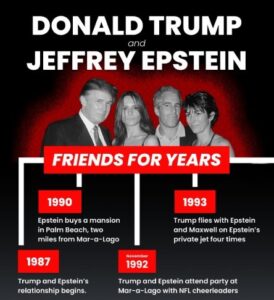
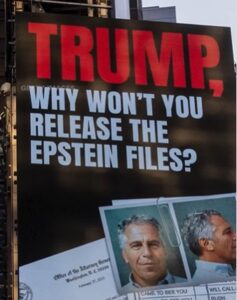
- Epstein Files released by House Oversight Committee.
- Also on September 2, 2025, the House Oversight and Government Reform Committee published 33,295 pages of documents concerning Jeffrey Epstein after the Justice Department received a subpoena to release the information.
- Opponents say, however, that about 97 percent of these files were already in the public domain, and even the few pages of new content are a byproduct of the U.S. Customs and Border Protection flight logs.
- The way the release was done, through a massive redacted Google Drive dump, was mocked as being poorly organized and hard to search.
- Continue Push toward Full Transparency
- There is a bipartisan bill introduced by Rep. Thomas Massie (R-KY) and Rep. Ro Khanna (D-CA), which is attempting to create a House vote to compel the complete, unredacted disclosure of all unclassified DOJ documents about Epstein—even those of the FBI and the U.S. Attorney.
- Speaker Mike Johnson rejected their discharge request as inartfully drafted, and voided it, as it was just released by the committee.
- Victim Testimony and Subpoenas widen the Investigation.
- During a closed-door hearing, six Epstein victims told legislators about new people of interest, which led to emotional reaction among those present and supported the need to further investigate.
- The committee has subpoenaed records of the estate of the late Epstein and depositions of Ghislaine Maxwell, former President Bill Clinton, former F.B.I. Directors James Comey and Robert Mueller, former U.S. Attorney Alex Acosta.
- A press meeting with the victims is to be held and the leadership has accepted to proceed with a vote in the House to proceed with the investigation this week.
- Budget Cuts are recommended by Appropriations Panel.
- On its own, the House Appropriations Committee is moving a huge non-defense Labor, Health, Education, and Human Services appropriations bill. Such a step suggests a 7 per cent reduction, rescinding or eliminating more than 100 of these programs, and decreasing discretionary expenditure by 13.7 billion dollars – in line with the fiscal interest of President Trump.
Why It Matters
- Transparency & Accountability: The Epstein case remains a thorny area of politics in the United States. The parsimony of the recent release and disappointments about access to meaningful new information continue to press the task of congressional oversight.
- Partisan Misery: In spite of inter-party controversies, there is a growing unanimity–as well as an outcry on the part of the people–to publish all pertinent documents, with appropriate safeguards to the victim of such disclosure.
- General Policy Impact: As the proposal awaiting the consideration of the Appropriations Committee reflects the overall financial position of the House, it will reflect the change in funding of domestic programs that will impact millions of Americans.

Brief summary- where we stand at this point.
- The House Appropriations Committee also introduced their FY2026 Labor, HHS, Education, and related agencies bill that includes a discretionary allocation of $184.5 billion, which is 13.7 billion (or about 7 percent) less than the FY2025 levels enacted. The bill was reported by the subcommittee and passed in partisan fashion by the entire Appropriations Committee.
- Republicans position the bill as consistent with the spending priorities of the Administration and claim that the bill eliminates or cuts over 100 programs they say are wasteful; Democrats claim that the cuts are dramatic and will significantly reduce services and research funding.
Subcommittee LHHS Subcommittee role (quick primer)
- The spending bill is written by the LHHS subcommittee and funds the Department of Labor, Department of Health and Human Services (HHS) (including CDC, NIH, AHRQ, SAMHSA, etc.), the Department of Education and a group of related agencies (e.g., Corporation of Public Broadcasting, Institute of Museum and Library Services).
- The subcommittee would hold hearings on agency secretaries, write the bill with program-level allocations and policy riders; the bill then would be subjected to full Appropriations Committee markup, to the House floor, to the House-Senate conference and finally to the President. Final amount and timing would be based on floor votes, Senate proposals and any continuing resolutions. (Process mentioned in the committee release and report).
Agency changes and top-line numbers.
- Total LHHS discretionary: 184.5B (= 13.7B/7% less than enacted FY2025).
- Education Department: Committee Democrats summary and reporting estimate about $12.1B (= 15 percent) Education cut (framing contested between sides; some items not cut). That 15% number is found in several places that give a summary of the analysis of Democrats.
- Department of Labor (DOL): Proposed cut of about 4B (~2830) reported in committee documents (Democratic summary) below FY2025.
- HHS generally: -6-7 percent in committee draft coverage; within HHS, CDC is significantly harmed (reporting cites a 1.7B cut, putting CDC at approximately 7.4B) though the NIH is about level at around 48B in the committee draft (i.e., spared compared to the deeper cut in the Administration).
Particular program level effects (headline items).
The most significant program changes identified by committee materials and reporting are listed below – these are the programs that are likely to be of the most interest to constituencies and stakeholders.
Education
- Title I (aid to high-poverty K-12 districts): Title I in the House proposal is reportedly significantly cut; some outlets talk of percentage cuts in the single-digit range (in one of the summaries, it shows up to about 27 percent). This would reduce core funding of disadvantaged students should it be enacted.
- Title II / Teacher training: The draft seems to end or radically reduce funding on a host of federal teacher professional development programs (committee Democrats highlighted end of teacher training and community school funding).
- Higher education programs: The bill by the subcommittee would cut various campus- and program-level services (the HigherEdDive article mentions that the Dept. of Education would be reduced by about 15 percent as a whole and that individual programs would be reduced). Some coverage is apparently retained by Pell maximum, and numerous campus-based and competitive grant programs are being cut.
Health (HHS / CDC / NIH / Public Health).
- CDC: The bill would cut CDC discretionary funding by about $1.7B (committee reporting), so the total of CDC is about 7.4B in the draft. That influences disease surveillance and various prevention programs.
- NIH: Not much to defend in the House budget -~48B- research funding remains intact instead of getting a huge reduction. (NIH had 27 institutes/centers, which was retained by the Committee; the White House had suggested them to be consolidated.)
- Public-health grant programs, community health: Multiple grants and discretionary public-health programs are cut or put on the chopping block; the committee summary cites elimination or reduction of numerous HHS-specific programs.
- Labor / Workforce
Department of Labor: Huge proportional reductions – Reporting indicates a cut of about $4B (28-30) to a variety of job-training, worker-protection, and worker-safety programs (the specific list of programs is in the committee text and in Democratic documents). This would strike workforce innovation grants, apprenticeship supports, and part of the enforcement resources.
Other notable items
- Corporation for Public Broadcasting (PBS/NPR): traditionally targeted in GOP bills; similar targets are indicated by the broader “eliminate/defunds” language of this package. (See committee messaging and press releases by Democrats.)
- Community Project Funding / Earmarks: Removed in this bill (in line with the committee messaging on ending earmarks/community project funding).
What this means in practice
- When passed as proposed: Significant cuts to education and workforce supports would fall on states/localities or require program cuts; public-health surveillance and prevention capacity may be decreased in certain locations; research (NIH) would be largely intact, but some specific research or public health activities might be curtailed.
- However, – this is an early House bill: The Senate will normally introduce its own bills (which are usually less draconian on internal programs), and any final FY funding will have to be negotiated by conference or continuing resolution. The House Democrats have cut a lot that is politically framed and will be challenged on the floor and in conference. Expect changes.
- Time and politics: Since this bill was pushed through committees on party lines this means that it will pass the floor only if the GOP remains unified. Democrats will make the cuts a message in policy debate and appropriation battles. Opposition is already being organized by interest groups (education associations, public-health organizations, unions).
Sources (documentation and reporting)
- House Appropriations Committee press release and bill summary (committee text / allocation numbers).
- House report on LHHS appropriations (H. Rept. 118-585 -text of committee report, and background).
- STAT on CDC/NIH and changes to the health programs in the bill.
- HigherEdDive and ACE and other higher-ed coverage of the proposed Education Department cuts.
- Democrat Appropriations documents summarizing program and cut impacts.
- Other reporting on summative agency-level percentage reductions (DOL, Education).
Need a more action-ready deliverable?
I have an instantaneous ability to generate any of the following (no delay):
- A table of programs (Title I, Title II, Pell, CDC grant lines, NIH institutes, DOL programs) that are impacted with FY2025 amounts enacted compared to House proposal and percentage change (sourced line-by-line).
- A one-page memo you can disseminate to stakeholders giving a summary of probable impacts to schools, public-health departments, and workforce programs.
- All LHHS line item, with the proposed amounts in FY2026 (compiled based on the committee report) in spreadsheet (CSV/XLSX).
Conclusion
The FY2026 bill sponsored by the House Appropriations Subcommittee will signify a significant change in priorities on domestic spending, reducing more than 13.7 billion in Labor, Health and Education funds.
Although NIH research has mostly been spared, the CDC, Department of Education, and Department of Labor are experiencing severe cuts that may transform national public health capacity, school funding, and workforce development.
It has been hypogian in the sense that republicans have been selling as a cost cutting mechanism and democrats have proceeded to say that there are some adverse effects that are attendant to it and it has a disastrous effect to the lives of the needy.
So the final budget result will be a matter of negotiation, but the House version prepares the groundwork of a bitter appropriations battle.
Also read- Jerry nadler will retire in 2026


1 thought on “House Committee Releases Epstein Case Files”