
NASA discover life on mars – this is the recent stuff and what scientists are telling (but not found life yet).
Strong evidence of ancient Martian life has been discovered by NASA rover- organic molecules and minerals provide evidence of biosignatures, but a sample return will be required to confirm the presence of life.
What was announced
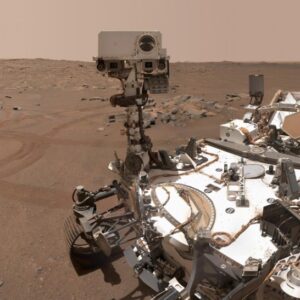
- And on July 2024 the Perseverance rover of NASA pillaged a sample of a rock in Jezero Crater named Cheyava Falls.
- That sample is referred to as Sapphire Canyon.
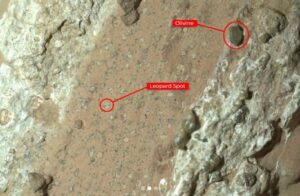
- On the sample, researchers discovered minerals and chemical textures that were interesting: vivianite (iron phosphate), greigite (iron sulfide), organic carbon, and patterns (leopard spots, nodules, etc.).
- These minerals and textures have been linked on Earth to the activity of microbes living in the wet and low-oxygen (anoxic) conditions. That is to say that these are possible biosignatures (evidence that life might have been present in the past).
What is not yet established
- This does not mean that there was life on Mars – scientists are wary. Non-biological processes may be a possible explanation of these signs.
- Sample Mars The sample remains on Mars; critical tests capable of more conclusively validating the existence of life must be conducted on Earth one time (when) the sample is returned.
- Fiction Nasa speaks technicalese: potential biosignature, strongest evidence yet, closest we have come as opposed to stating that they had found life.
In greater detail this is what scientists found.
They are grounded on a peer-reviewed article in Nature, NASA reports and commentary by experts.
- Rock, sample, and location
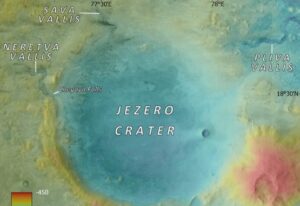
o Cheyava Falls is one such nickname of a rock located in Bright Angel which is a formation within the river valley known as Neretva Vallis, which is an old river valley that empties to Jezero Crater.
o Its drilled sample is known as Sapphire Canyon (sample 25 of Perseverance).
- Geological / environmental setting.
o The Bright Angel formation comprises sedimentary rocks composed of fine grains which include clay and silt and were formed in a watery environment which occurred in the past.
o The environment is also understood to have been habitable, meaning that it contained water, low oxygen, and sources of chemical energy (e.g. iron, sulfur, phosphorous) that could support possible life metabolisms.
- Peer review and publication
o The results have been peer reviewed with the ultimate outcome being Nature: Redox-driven mineral and organic associations in Jezero Crater, Mars.
o NASA has also been disseminated throughout, to enable other scientists to put their alternative explanations to test.
What is uncertain (what has not been determined son)
Even though this is a good sign, the researchers and NASA are cautious to mention that this does not point to the existence of the past life. Key uncertainties include:
- Alternative abiotic explanations: This still does not rule out the possibility that other non-biological purely geochemical processes may be able to create similar textures, mineral assemblages and organic evidence. By way of illustration, some of these features may be simulated by chemical reactions of minerals and organic carbon in the absence of microbes or processes occurring naturally, such as weathering.
- Preservation and contamination: This is whether organic carbon is well-preserved or modified (i.e. degraded by radiations, oxidizing conditions, etc.), which may complicate interpretation. In situ measurements also have disadvantages over lab-based analysis.
- Sample return / lab analysis on Earth required: A number of the more conclusive biosignatures tests need advanced equipment in terrestrial laboratories (e.g. isotopic ratios, some trace compounds) which are currently not available on the Mars rovers. NASA underlines that the use of samples back to the Earth is still important.
- Temporal uncertainties: When the rock was formed and the precise time of the formation of the chemical/mineral features is open to geologic interpretation. This is a very old period (3.2-3.8 billion years ago), but facts count when it comes to determining whether the environment was indeed habitable during this period.
What this does represent
- And according to NASA and the scientists: it is one of the most interesting candidate sites / samples investigated so far on Mars on the possibility of biosignatures.
- It demonstrates that Mars had ancient conditions and environment (right ingredients, conditions) with water, organisms, energy gradients that could have been habitable to microbial life. Although these signs may be abiotic, they would inform us much about what Mars used to be like in the past in terms of its habitation.
The next step that scientists are planning to undertake.
The next important steps are to shift the biosignature that is a possibility / potential to a more defined one:
- Return the sample to Earth
o This enables the analysis with much more accurate techniques (lab instruments, isotope fractionation, molecular structure, ultra-trace detection) which can distinguish much better between the origin of a biological and non-biological one.
o Nevertheless, Mars Sample Return mission is complicated (cost, technical complexity, timeline). The NASA is still determined, although it is not clear which timelines it is going to have.
- Lab analog experiment and modeling.
o Scientists will attempt to create similar mineral textures and organic/mineral combinations by abiotic processes on Earth, to be able to test whether these processes alone are sufficient to explain what is observed.
o Field analogs: Earth environments The environments of Earth that are analogous (lakebeds of the ancient period, mudstones of low oxygen, etc.).
- In situ Mars tests
o In the event that measurements can be made onboard Perseverance, additional measurements to complement data should be made. Already used instruments such as PIXL, SHERLOC, etc. which are not fine-scale or different angles could be useful.
- Look elsewhere to find supporting evidence.
o Determining whether other rocks, other regions of Mars, have similar biosignature-like features in order to discover whether they are local anomalies or common.
o Followup missions (such as orbiters, perhaps other rovers, or the European Rosalind Franklin rover) might be useful.

Conclusion
The Perseverance rover of NASA has provided the best evidence yet of the possible ancient life on Mars, discovering organics, unusual mineral associations, and textures in a Jezero Crater rock sample. Although such findings are highly indicative of the microbial activity, scientists emphasize that such findings are not the conclusive evidence. The discovery underlines the possible past habitability of Mars and the significance of retrieving samples on the planet back to the Earth to be definitively tested.
Also read- Convolutional Neural Network CNNs


1 thought on “Shocking Facts , NASA discover life on mars 2020 mission”