
What is AI? about the concept of Artificial Intelligence (AI), its working mechanism, and its use in everyday life. Learn about AI types, machine learning, and AI and its impact on our everyday life.
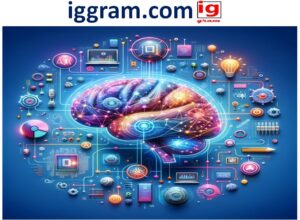
AI is an abbreviation that means Artificial Intelligence.
Artificial Intelligence (AI) is the process of imitating human thoughts in programmed machines to think, learn, and make decisions. The tasks which these machines are capable of executing are those which typically involve human smartness, including:
- As language is a component of AI, comprehending it (as in a chatbot or virtual assistants) comes with understanding language.
- indentifying pictures or words.
- Solving problems and decision-making.
- Experiential learning (data-driven learning).
To put it simply, AI is the machine or programs that are set up to think and behave similarly to human beings to a certain degree.
The capabilities and functionality are the common ways of categorizing AI.
Based on Capabilities
1.Narrow AI (Weak AI)
o Focused on specific tasks.
o Unable to undertake work beyond its programming.
Examples:
a)This includes Siri or Alexa (voice assistants).
b) Netflix recommendation system.
c)Self-driving cars with car navigation systems.
2.General AI (Strong AI)
a) Is able to do any intellectual thing that a human is able to perform.
b) Consider it to be a machine with human reasoning.
c) This is not yet in existence, but this is the objective in the future.
3.Superintelligent AI
a) Outsmarts man in all aspects.
b) Theoretical and most arguable.
c) Was possibly able to think, learn and be innovative more than a human being can.

Based on Functionality
- Reactive Machines
o Basic AI reactionary but lacking memory.
o IBM Deep Blue (chess-playing AI) is an example.
- Limited Memory AI
o Be able to learn based on previous data to make decisions.
o Example: Self-driving vehicles are able to react to predicted upcoming driving information based on previous driving data.
- Theory of Mind AI (Future AI)
o Will perceive feelings, beliefs and thoughts.
o Would be able to engage more with human beings.
- Self-Aware AI (Future AI)
o Consciousness in machines.
o The most advanced, pure theoretical at the moment.
Shortly: AI is concerned with the development of machines capable of thinking and decision-making, whether it is a simple system oriented on a set of tasks or possibly conscious machines in the future.
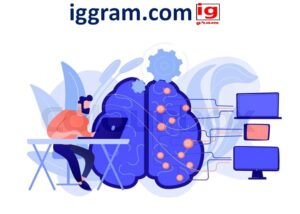
In fact AI is everywhere, and we are usually unaware of it. The following are some of the day to day examples:
- Smartphones
- Voice assistants: Siri, Google Assistant, Alexa are intelligent and they know what you say.
- Miscellaneous: Type a few words and you can see it suggesting words as you do and correcting you.
- Camera: AI enhances photos and filters and faces, which can be automatically added.
- Online Services
- Streaming There are recommending services: Netflix, Spotify, YouTube can recommend movies, shows or songs to you.
- Social media: Instagram or Tik Tok AI dictates what will be displayed in your feed.
- Shopping recommendations: Amazon recommends products that you may enjoy seeing after your previous purchases.
- Transportation
- GPS & Maps: Google Maps anticipates the traffic and the best ways to get there.
- Self-driving vehicles: Tesla and other companies employ AI to identify the roads, signs, and obstacles.
- Banking & Finance
- Fraud detection: Banks can detect abnormal transactions with the help of AI.
- The loans approvals: AI uses your loan history and credit habits to approve and/or deny loans.
- Health & Fitness
- Wearables: Smartwatches will monitor your heart rate, sleep patterns and recommend exercises to do.
- Medical diagnostics: AI will assist doctors in diagnosing diseases more quickly than a human being using a scan.
- Customer Service
- Chatbots: Chatbots are online websites that provide real time answers to questions based on AI.
- Email filters: Gmail is an AI that eliminates spam and sorts your inbox.
In essence, AI is the covert robot in numerous applications, machines, and services that simplify life, enhance intelligence, and personalize it.
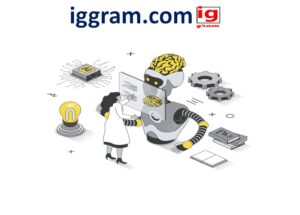
how AI learns and takes decisions in a natural, ordinary manner. Imagine that you are training a machine to be able to identify patterns and choose.
- AI Learns from Data
- Examples are required by AI to learn, which is also known as training data.
- Example: In order to get an AI to learn the concept of cats, you feed the machine thousands of images of cats and non-cats.
- The AI searches the image patterns such as shape, color, and details that identify a cat.
- Algorithms: AI’s Brain
- An algorithm can be described as a recipe or stepwise instruction to process information by the AI.
- The algorithm is used to analyze data and predict as well as identify patterns by the AI.
- e.g. The Netflix algorithm will recommend a show to you based on how you have watched in the past.
- Machine Learning (ML)
- Machine Learning is a form of AI through which machines become trained through experience without the need to be told by a program.
- Example: A spam filter in your email finds out what is spam by studying patterns of the previous email to determine what is spam.
- Deep Learning
- An improved type of ML based on artificial neural networks which are based on the operations of human brains.
- Self-driving cars apply deep learning to identify pedestrians, road signs, and road lights.
- Decision-Making
- Once AI acquires the patterns, it is able to make a decision or predictions.
- Example:
o Fraud detection credit card: This is a suspicious transaction, mark it.
o Music suggestion: 1. You listen to fast-beat pop songs, recommend this playlist.
- Continuous Learning
- Numerous AI systems continue to learn. The greater the amount of data they view, the more they are enhanced.
- Following: Your voice assistant is getting better at understanding your accent as you talk to it.
Simply put: AI will be similar to a child teaching a wise apprentice. You provide it with examples (data), you demonstrate the ways of analyzing patters (algorithms) and it learns to make decisions or predictions independently.
conclusion
Artificial Intelligence (AI) is a science of the creation of machines which can think, learn and make decisions as humans. AI is currently present in our life in the form of voice assistants and recommendation systems, self-driving cars and medical diagnostics.
AI is an algorithm that learns using data, identifies trends, and takes predictions or decisions. Its capabilities are narrow AI that works well at certain tasks to the superintelligent AI, which is theoretical and may outperform the intelligence of human beings.
Simply put, AI is an effective instrument, which promotes efficiency, personalization, and problem-solving, and defines how we live, work, and interact with technology.
Also read- unveils $799 Revolutionary Meta Ray-Ban Display glasses by Mark Zuckerberg


1 thought on “Trusted 2 Simple term What is AI? and What does AI stand for?”